The Man Who Knew How You Took Your Coffee Before You Even Opened the Door
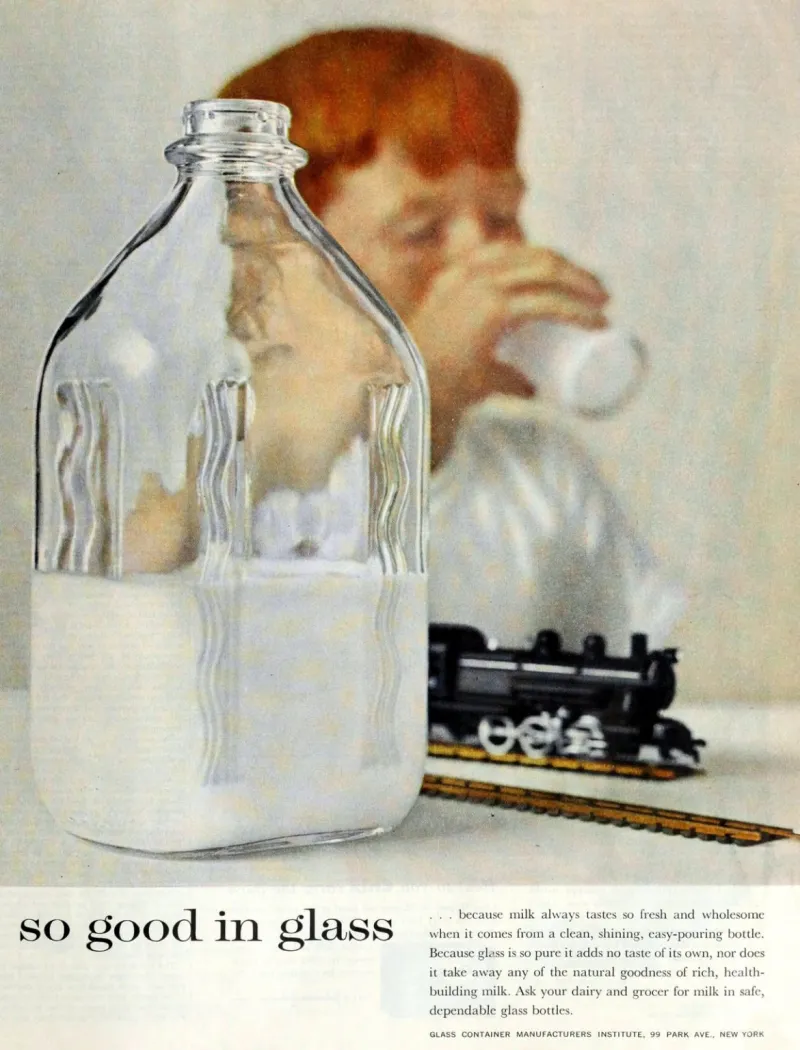
Photo: vintage American milkman doorstep delivery 1950s glass bottles, via clickamericana.com
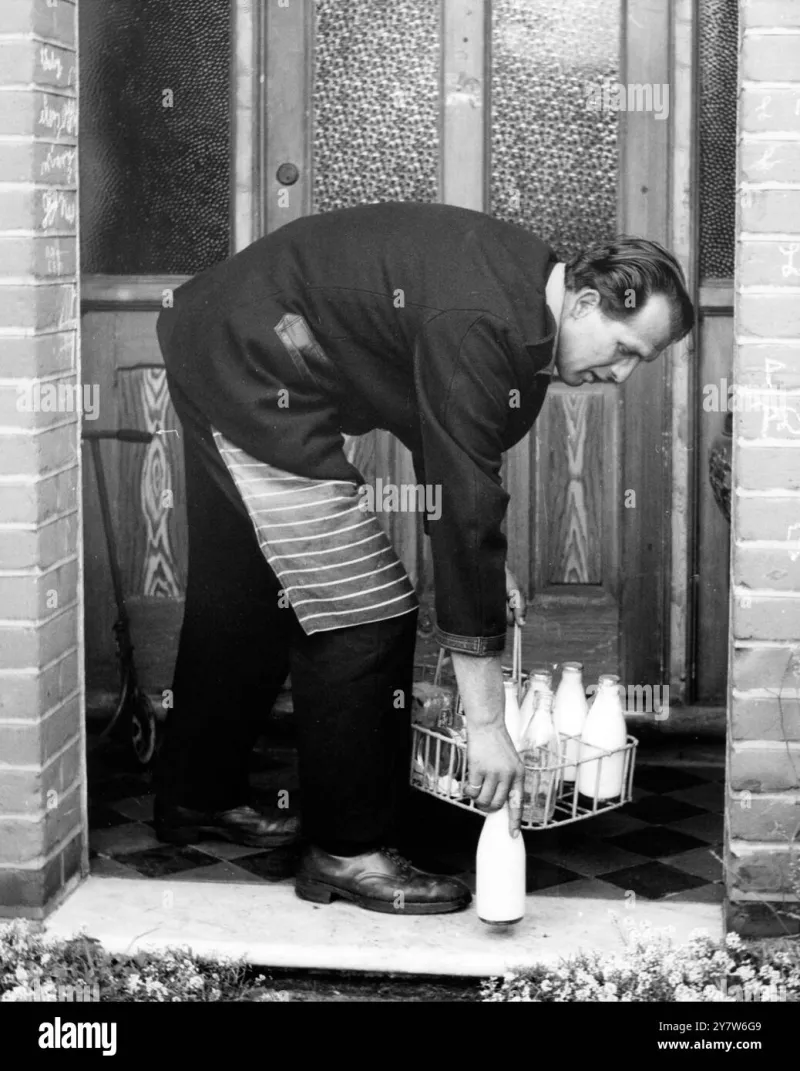
He came before the neighborhood woke up. By the time your alarm went off, he'd already been to a dozen houses on your street, glass bottles clinking softly in the pre-dawn quiet. He knew you were pregnant before you told the neighbors — because you'd left a note asking for an extra quart. He knew when company was coming because the order doubled on Thursday. He knew when things were tight because the order shrank, and sometimes he left the milk anyway and said nothing about it until you could settle up.
The American milkman is gone now, replaced by refrigerated cases and two-day delivery windows and an app that will bring you oat milk in 30 minutes from a warehouse you'll never see. The product arrived. The relationship didn't.
A Business Model Built on Knowing You
At its peak in the 1950s, roughly 30 percent of all milk consumed in America was delivered directly to doorsteps. In some cities, the percentage was even higher. The milkman — and it was almost always a man — ran a route that was less a delivery schedule and more a living map of the neighborhood's daily life.
Routes were often inherited or purchased, because the relationships built into them had genuine value. A good milkman knew which families had young kids who went through milk fast, which elderly customers needed their bottles placed inside the screen door, and which households had a dog that needed managing. He kept a running tab for customers who paid weekly or monthly, and he extended grace when circumstances called for it.
This wasn't sentimentality — it was business logic. In a world before supermarket loyalty programs and algorithmic customer retention, the milkman's knowledge of your household was his competitive advantage. He kept your business by being genuinely useful to you as a person, not as a demographic.
And in return, you trusted him with something that feels almost impossible today: unsupervised access to your home's threshold, your schedule, your consumption habits, and often your front door key.
The Note on the Bottle
The communication system between milkman and customer was elegantly low-tech. You left a note in an empty bottle the night before. Two extra quarts Saturday — guests coming. Skip Tuesday, we'll be out of town. Could you leave a dozen eggs this week?
Those notes were a form of intimacy. You were communicating the rhythms of your life to someone who genuinely needed to know them — and who would act on them without question. There was no confirmation email, no order tracking, no customer service line. There was just a man who read your note and showed up accordingly.
When the system worked — and it usually did — it felt less like commerce and more like having a reliable neighbor who happened to also provide dairy. The transaction was embedded in a relationship, and the relationship made the transaction feel human.
When Convenience Came for the Milkman
The decline started in the 1960s and accelerated through the 70s. Supermarkets expanded, refrigerators got bigger, and car ownership made it easier to buy in bulk. Milk at the grocery store was cheaper — sometimes significantly — because the overhead of personalized doorstep delivery couldn't compete with the economies of scale that big retail chains were mastering.
Consumers made a rational choice. They chose the lower price and the convenience of picking up milk while they were already shopping. Nobody held a funeral for the milkman. People just stopped leaving notes in the bottles, and one morning he stopped coming, and that was that.
By 1975, doorstep delivery had dropped to under five percent of the market. By 1990, it was a rounding error. The infrastructure of personalized local commerce — the routes, the relationships, the rhythms — dissolved within a single generation.
The Delivery App That Knows Nothing About You
Today, you can have milk at your door within the hour. The app is slick, the logistics are extraordinary, and the driver who drops it off — if there is a human driver at all — has no idea who you are, has never seen your face, and will likely never come back. The delivery is contactless by design. The transaction is frictionless. And it is completely, utterly anonymous.
This isn't a criticism of the people working in modern delivery — they're doing a job in a system that was designed around speed and efficiency, not relationship. But it's worth noticing what that design choice reveals about what we now value in commerce. We optimized for price and convenience and got exactly that. We didn't optimize for human connection, and we got exactly that too.
The modern grocery delivery app knows your order history. It knows what time you usually shop and what products you reorder. But it doesn't know you. It knows your data. The milkman knew your life.
What We Traded Without Realizing It
There's a version of this story where the milkman's disappearance is purely a market correction — an inefficient service replaced by a more efficient one. And economically, that's largely true.
But there's another version where the milkman was one of dozens of daily human touchpoints that made American neighborhood life feel inhabited. The milkman, the mailman who knew your name, the pharmacist who remembered your prescriptions without looking them up, the butcher who set aside a good cut because he knew you were coming Friday — these weren't just service providers. They were the texture of a community. The background hum of being known.
We didn't consciously choose to trade that texture for convenience. We made a series of small rational decisions — cheaper milk here, faster delivery there — and arrived somewhere we never quite agreed to go. A world where everything arrives efficiently and nothing arrives personally.
The bottles are gone. The notes are gone. And the man who read them — and actually showed up — is gone too.