The Kid Next Door Used to Watch Your Children — Before Trust Became a Liability
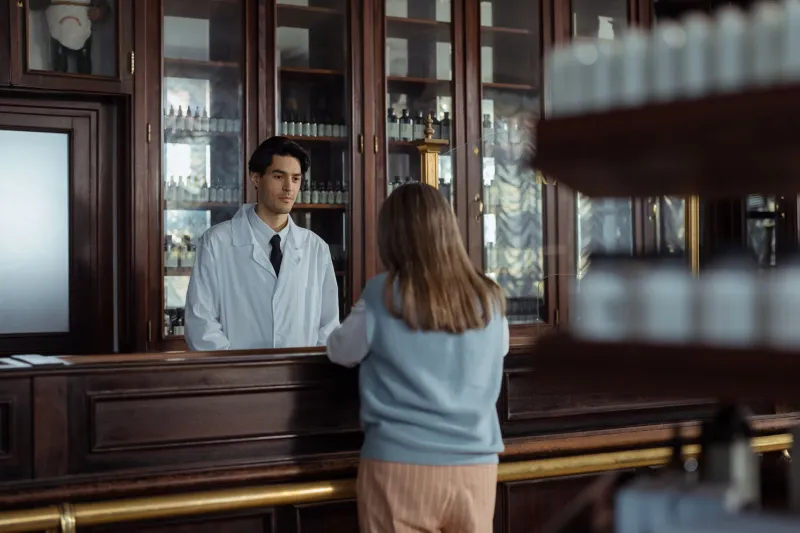
Sometime in the late 1970s, on a Friday evening in a subdivision outside Columbus, Ohio, a mother named Carol walked across the street, knocked on the Hendersons' door, and asked if their thirteen-year-old daughter Lisa could watch the kids for a few hours. Lisa said sure. Carol handed her a phone number for the restaurant, told her the kids had already eaten, and left.
No contract. No background check. No emergency contact binder. No camera hidden in the bookshelf. Just a phone number on a piece of paper and a wave from the driveway.
Lisa made $1.50 an hour, watched three episodes of whatever was on, put the kids to bed without incident, and walked home at ten o'clock. Everyone was fine. Everyone was always fine.
That world still exists in memory. In practice, it has almost entirely vanished.
How Babysitting Used to Work
For most of the postwar era, childcare in American neighborhoods operated on a system that economists would call informal and parents would simply call common sense. Teenagers — usually girls, though not always — earned spending money by watching younger kids in the neighborhood. Parents trusted them because they knew them. They knew their families, their reputations, their older siblings. The community itself was the vetting system.
Rates were low because expectations were modest. Keep the kids alive, put them to bed on time, don't throw a party. The babysitter wasn't expected to be an early childhood development specialist. She was expected to be responsible enough to handle a scraped knee and smart enough to call an adult if something went sideways.
This arrangement worked across millions of American households for decades. It gave teenagers real responsibility and real income. It gave parents affordable flexibility. And it was held together entirely by the social fabric of the neighborhood — by the fact that everybody more or less knew everybody else.
When Did Everything Get So Complicated?
The shift was gradual, then sudden. A series of high-profile child abduction cases in the 1980s — amplified enormously by television news coverage — began changing the emotional temperature around child safety in ways that were understandable but far-reaching. The image of the trusted neighbor started carrying a new shadow of doubt.
By the 1990s, the conversation around childcare was changing in professional and legal circles. Liability concerns entered the picture. Daycares and childcare centers faced increasing regulation, which was appropriate. But the cultural anxiety that drove that regulation didn't stay neatly inside licensed facilities. It seeped into the informal world of neighborhood babysitting too.
Parents started asking more questions. Then more questions became a checklist. The checklist became a reference call. The reference call became, for some families, an actual background screening. By the 2010s, services like Care.com had formalized the entire process — complete with profile verification, parent reviews, and the ability to run criminal background checks on anyone you were considering.
The neighbor's teenager, who had no profile and no reviews and no searchable history, started looking like a liability rather than a convenience.
The Nanny Cam and the New Anxiety
Home surveillance technology did something specific to the psychology of childcare. When a camera in the living room became a $40 purchase at Target, it changed the nature of the relationship between parent and caregiver in ways that are hard to fully unpack.
On one level, it's a practical tool. Parents feel better. Some bad actors have been caught. The technology exists, so why not use it?
But there's another level where the nanny cam represents something more uncomfortable: the acknowledgment that trust, by itself, is no longer considered sufficient. You don't just trust the person watching your children. You verify them. Continuously. In real time. The camera is not a supplement to trust — in many households, it has replaced it.
The teenager from down the street doesn't fit into this framework. She can't be background-checked through a platform. She has no reviews. She doesn't carry liability insurance. She is, by the logic of the modern childcare market, unverifiable — and therefore, for many parents, unacceptable.
What It Costs Now
The financial gap between then and now is striking. A teenage babysitter in 1978 might have charged $1.50 to $2.00 an hour. Adjusted for inflation, that's roughly $7 to $8 in today's dollars — which, coincidentally, is close to what some teenage sitters still charge in lower-cost areas.
But the professional childcare market operates in an entirely different range. Nanny placement agencies charge families a finder's fee that can run $1,500 to $3,000. Certified nannies in major metropolitan areas command $25 to $40 an hour. Daycare centers in cities like San Francisco or New York can run $2,500 to $3,500 a month per child — more than many Americans pay in rent.
For families who can't access informal arrangements and can't afford professional care, the math simply doesn't work. It's one of the quiet economic pressures that never quite makes the headlines but shapes millions of decisions about whether a parent returns to work, whether a family can afford a second child, whether someone takes a job that requires evening hours.
Something the Algorithm Can't Replace
The neighborhood babysitter wasn't just a childcare solution. She was a thread in a larger social fabric — a way that communities looked after each other's children, a way teenagers learned responsibility, a way parents shared the load of raising kids in proximity to other people raising kids.
That fabric has frayed in ways that go well beyond babysitting. Neighbors know each other less. Kids play outside less. The informal networks of mutual reliance that once made a suburb or a city block function like an extended family have thinned out considerably.
The background check didn't cause that. But it reflects it. When you need a platform to verify the fourteen-year-old from three houses down, something fundamental about community trust has already changed.
Carol and Lisa are both grandmothers now. They still live near each other. They still wave from their driveways.
Neither one could tell you exactly when things got so complicated. But both of them remember when they weren't.