A Nickel Coke and a Stool at the Counter — The Vanishing American Ritual Nobody Replaced
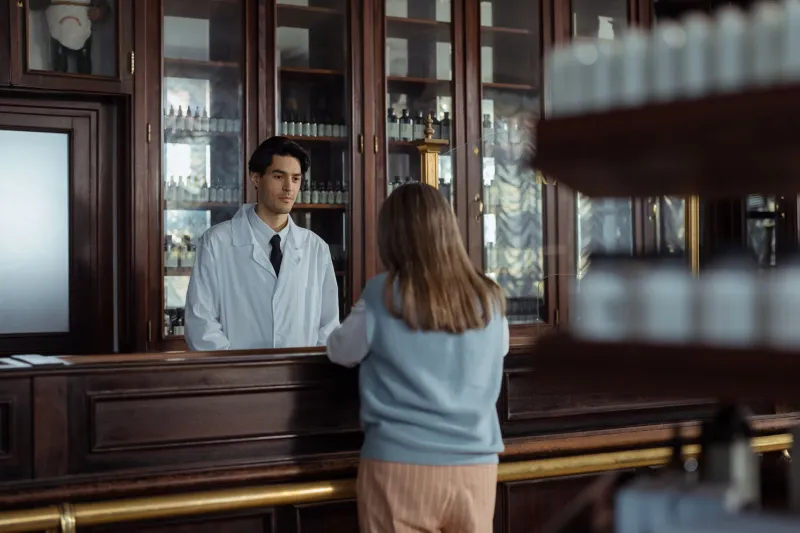
Picture this: It's 1952, somewhere in middle America. A teenager slides onto a chrome stool at the local drugstore counter. A retired mailman is two seats down, nursing a chocolate phosphate and reading the afternoon paper. A young mother waits for her prescription while her kids argue over cherry versus vanilla. The soda jerk — that was actually the job title — knows everyone's order before they open their mouths.
For roughly a century, this scene repeated itself millions of times a day across the United States. The soda fountain wasn't a restaurant, wasn't a bar, wasn't a coffee shop. It was something rarer: a genuinely democratic public space where age, income, and social status dissolved at the counter's edge. You didn't need much money to belong there. You just needed to show up.
We replaced it with a speaker box and a window. And we haven't fully recovered.
How the Soda Fountain Actually Worked
The American soda fountain traces its roots to the mid-1800s, when pharmacies began installing carbonated water dispensers — originally promoted for their supposed health benefits. By the early 1900s, the medical pretense had been cheerfully abandoned, and soda fountains were everywhere: inside drugstores, department stores, dime stores, and dedicated ice cream parlors. By the 1940s, there were an estimated 100,000 soda fountains operating across the country.
The menu was simple and cheap. A fountain Coke cost a nickel — about 60 cents in today's money. A milkshake ran a dime or fifteen cents. An ice cream sundae might set you back a quarter on a splurge. For that price, you got a seat, a skilled counter person who mixed your drink to order, and implicit permission to stay as long as you liked.
That last part mattered more than people realized at the time. The soda fountain was one of the few public spaces in America where lingering was not only tolerated but expected. Nobody handed you a receipt and waited for you to leave. Nobody needed your table back for the next turn. You were a regular, or you were about to become one.
The Counter Was the Point
The physical design of the soda fountain was quietly revolutionary. A long counter with stools facing the action forced strangers into proximity. You couldn't really stare at your phone — there was no phone to stare at — so you talked to the person next to you, or you watched the soda jerk work, or you listened to the conversation happening two seats down. Sociologists today would call this "passive social engagement." In 1950, people just called it Tuesday.
This wasn't a trivial thing. Social researchers have documented for decades that what communities lose when shared third places disappear — those spaces that aren't home and aren't work — is a kind of casual, low-stakes human contact that turns out to be essential to how people feel about their lives. The soda fountain was, for millions of Americans, exactly that kind of place.
It was also unusually inclusive by the standards of its era — though with a painful asterisk. In the South, soda fountain counters were segregated, a fact that made the civil rights sit-ins of the early 1960s so pointed and powerful. When Black college students sat at lunch counters in Greensboro and Nashville demanding service, they weren't just protesting a meal. They were demanding access to the most ordinary form of American belonging.
What Killed the Counter
The decline of the soda fountain is usually blamed on one thing: the automobile. As American suburbs sprawled outward after World War II and car ownership became nearly universal, the logic of gathering on foot at a neighborhood counter started to break down. Why walk to the drugstore when you could drive to a shopping center? Why sit at a counter when you could eat in your car?
The drive-in restaurant was the soda fountain's first serious rival, and it kept the social element alive — barely. You still interacted with a carhop, still shared a parking lot with your neighbors. But the intimacy of the counter was gone, replaced by the privacy of your vehicle.
Then came the drive-through, which stripped away even that. McDonald's, Burger King, and the rest of the fast-food industry understood something important: Americans would sacrifice almost any social ritual for speed and convenience. The drive-through didn't invite you to linger. It was engineered to move you through as quickly as possible. The cup holder wasn't just a design feature — it was a philosophy.
By the 1970s, most soda fountains had closed or converted. The drugstore counter gave way to aisles of packaged goods and a pharmacy pickup window. The ice cream parlor became a chain. The soda jerk became a job title that required explanation.
The Drive-Through Didn't Replace What Was Lost
Today, Americans spend more on food consumed outside the home than at any point in history. We have more dining options, more delivery apps, more ways to get a cold drink in under three minutes than our grandparents could have imagined. And yet study after study finds that Americans report feeling more socially isolated than at almost any point since researchers started measuring it.
That's not a coincidence. It's an architectural problem as much as a cultural one. When you design a food system around the car — around individual pods moving through space without making contact — you get efficiency and you lose community. The drive-through window is a marvel of logistics. It is also, by design, a place where you are alone.
The soda fountain couldn't have survived unchanged into the 21st century. Costs, real estate, and changing tastes would have transformed it regardless. But what it represented — a cheap, open, unhurried place to be among people you recognized — is something we never quite found a substitute for. We just got better at not noticing the absence.