Saturday Mornings in a Parking Lot Used to Be Enough — Now Learning to Drive Costs More Than the Car Did
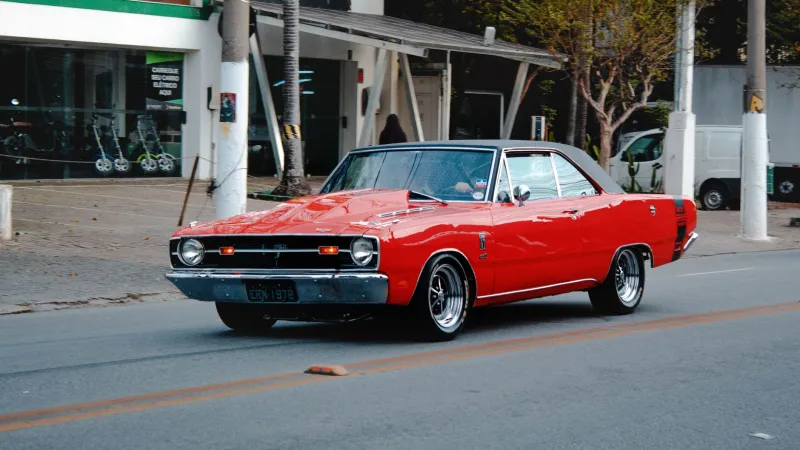
Somewhere around 1974, a sixteen-year-old named Gary climbed into the passenger seat of his father's Ford LTD, and they drove out to the empty lot behind the county fairgrounds. His dad showed him where the brake was, reminded him not to ride the clutch, and told him to just feel it out. An hour later, Gary had the basics. Two Saturdays after that, he was driving to school.
That was it. That was driver's education for a generation of Americans.
Today, Gary's grandson is sixteen and needs to complete thirty hours of classroom instruction, six hours of behind-the-wheel time with a state-certified instructor, fifty hours of supervised driving logged in a parent journal, and pass both a written and road test administered by the DMV. The whole process takes months. The bill runs anywhere from $300 to $600 depending on the state. And that's before you factor in what his presence on the insurance policy is going to cost.
Something changed. A lot, actually.
When a Parking Lot Was All the Classroom You Needed
For most of the 1960s and into the 1980s, driver's education in America was casual in a way that would make modern parents flinch. Many states required nothing beyond passing a basic written test and a short road exam. Plenty of teenagers learned entirely from a parent or older sibling in a quiet lot somewhere, then walked into the DMV and walked out with a license.
High schools did offer driver's ed programs, but they were embedded into the school day, often free or nearly free, and treated more like gym class than a serious certification process. You watched a few films — some of them genuinely terrifying — practiced parallel parking a couple of times, and that was considered adequate preparation for a lifetime behind the wheel.
The philosophy was simple: driving is a skill, and skills are learned by doing. Nobody thought much about liability. Nobody worried about whether the instructor had a specific credential. You learned, you drove, you figured it out.
How Regulation Quietly Took Over
The shift didn't happen overnight, but it accelerated steadily through the 1990s and 2000s. Federal highway safety data drew a direct line between young drivers and accident rates, and states responded with what became known as Graduated Driver Licensing systems — the GDL laws that most states now have in some form.
GDL programs are genuinely well-intentioned. The research shows they reduce teen crash fatalities. Restrictions on nighttime driving, passenger limits, and extended supervised practice periods have saved real lives. That part of the story is worth acknowledging.
But alongside the safety legislation came something else: the commercialization of the process. As schools quietly phased out their in-house driver's ed programs through budget cuts in the 1990s and early 2000s, private driving schools stepped into the gap. And private driving schools charge private driving school prices.
Today, in most states, you cannot simply show up at the DMV at sixteen and take a test. You need documentation. You need a learner's permit held for a minimum period. In many states, you need proof of completed instruction from an approved provider. The system now assumes — and in many cases legally requires — that a commercial third party be involved in teaching your kid to drive.
The Numbers Tell the Story
In 1970, getting a driver's license cost roughly the price of the test itself — a few dollars at most. If your school offered driver's ed, it was folded into your education at no additional charge. The total financial investment to put a teenager on the road legally was close to zero.
Today, a typical private driving school package in a mid-size American city runs between $350 and $600. Some urban programs in places like New York or Los Angeles charge considerably more. Add in the learner's permit fee, the license application fee, and the DMV test fee, and you're looking at costs that can easily clear $700 before the kid has driven to the grocery store once.
And then there's insurance. Adding a sixteen-year-old to a family auto policy can increase premiums by 50 to 100 percent. That's not a one-time cost. That's every year until they're off your policy.
A Coming-of-Age Moment, Monetized
What's most interesting about this shift isn't just the regulation — it's what the regulation reveals about how America treats milestones now. Getting a driver's license was once a deeply personal, family-driven rite of passage. It belonged to the neighborhood, to Saturday mornings, to the particular relationship between a nervous teenager and a patient parent.
Now it belongs to an industry. There are curriculum providers, certified instructors, approved course formats, state-mandated hour logs, and digital platforms for tracking supervised driving time. The intimacy of the parking lot has been replaced by the professionalism of the intake form.
None of this is entirely bad. Roads are safer. Young drivers are better prepared in measurable ways. The regulations exist because real people were getting hurt.
But something was also lost — a version of trust that said a family was capable of teaching its own children the basics of adult responsibility. The parking lot on Saturday morning wasn't just about turning a steering wheel. It was about a dad deciding his kid was ready. And somewhere along the way, we decided that wasn't enough of a credential anymore.
Gary still has his license. He got it in that empty fairground lot with his father's hand resting on the dashboard and nobody watching. He's never had an accident in fifty years of driving.
Make of that what you will.