The Man Who Left Milk on Your Porch Knew When You Were Sick — Modern Delivery Has No Idea You Exist
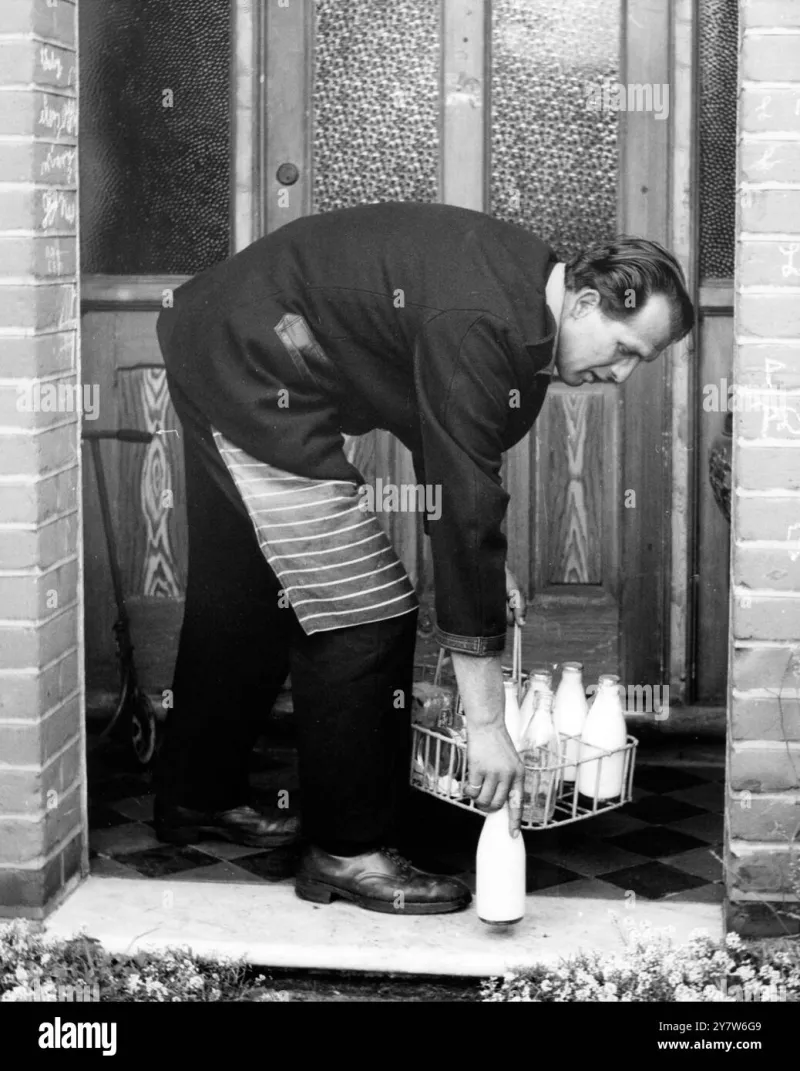
Photo: vintage 1950s milkman delivering milk bottles porch neighborhood, via c8.alamy.com
At some point in the 1950s, a milkman in a small Ohio town noticed that the bottles he'd left on the Kowalski porch two days earlier hadn't been taken inside. He knocked. No answer. He knocked again the next morning. Still nothing. He eventually called the family's neighbor, who had a key, and that's how they found out that Mrs. Kowalski had fallen and couldn't get up.
This story, or versions of it, happened across America with enough regularity that it barely counted as remarkable. It was just what happened when someone who knew you was paying attention.
Now contrast that with the last time a delivery driver knocked on your door. They probably didn't. They left a package on the step, took a photo of it, and were back in their car before you heard the notification on your phone. Nobody knows if you're okay. Nobody's counting the uncollected bottles.
The Golden Age of the Doorstep
Mid-century American home delivery was a genuine ecosystem, and it's easy to underestimate how comprehensive it was. The milkman is the most famous figure in this world, but he was far from alone.
The bread man came through several times a week, often with rolls, cakes, and pies alongside the standard loaves. The iceman made his rounds before refrigeration became universal — and even after, in neighborhoods where appliances arrived slowly. The dry cleaner picked up and dropped off. The diaper service was a genuine industry. In many cities, you could have coal delivered, fresh eggs delivered, even medicine delivered from the local pharmacy.
The Fuller Brush salesman and the Avon representative operated in this same ecosystem — direct, personal, door-to-door commerce that was built on relationship and repetition. These weren't strangers. They were recurring characters in the story of your neighborhood.
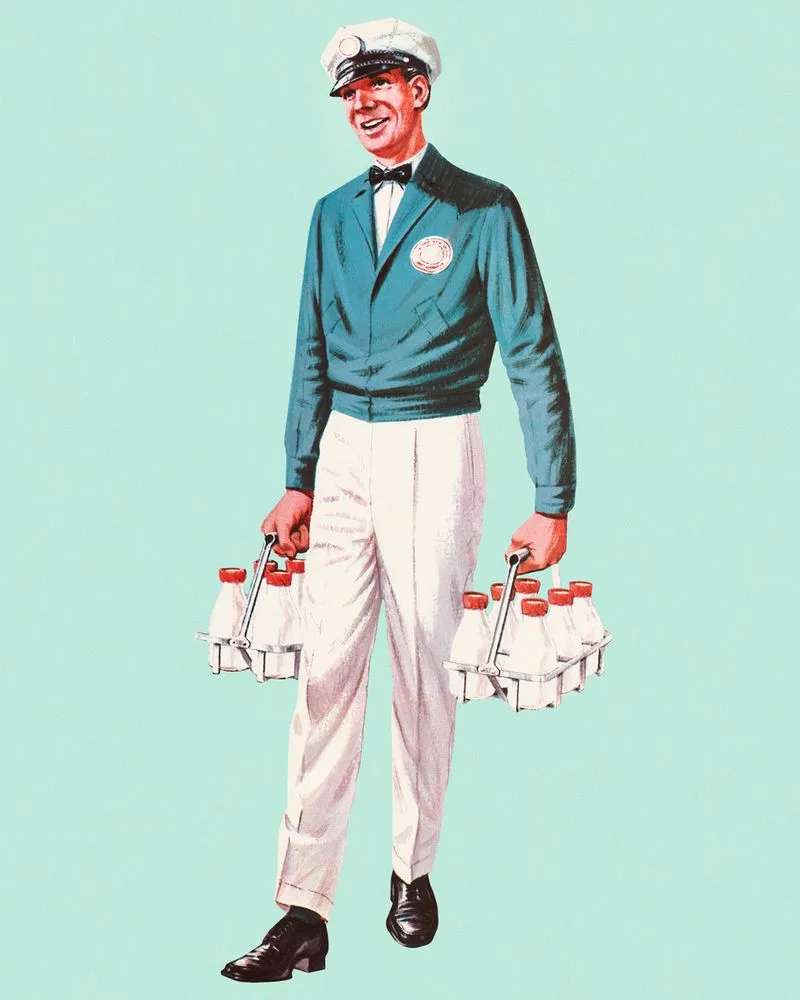
The milkman, though, was the archetype. He worked before dawn, moved fast, and knew every household on his route with an intimacy that sounds implausible now. He knew which families took two quarts and which took four. He knew when a new baby arrived because the order changed. He knew which households were struggling — because they'd asked him to hold the order for a week, and he had, and he hadn't made it a big deal.
The extension of informal credit was genuinely common. Families would leave notes in empty bottles — "Please leave an extra quart, we'll settle up Friday" — and the milkman would comply, because he knew them, and because his route was his business, and because a neighborhood's trust was worth more than a quart of milk.
How It Fell Apart
The decline of home delivery in the mid-20th century is a story with several authors.
The supermarket was the primary killer. As chain grocery stores expanded through the 1950s and 60s, they offered something the milkman couldn't: everything, in one place, at lower prices. The economics of centralized distribution beat the economics of individual routes. Families with cars — and suburban families increasingly had cars — found it easy to pick up milk with the rest of the weekly shop.
The refrigerator finished what the supermarket started. When reliable home refrigeration became standard, the daily or every-other-day delivery model lost much of its logic. You could buy a week's worth of milk at once and store it. The urgency of the doorstep delivery faded.
By the 1970s, home milk delivery had declined sharply from its peak. The bread route, the diaper service, the egg man — all followed the same trajectory. The ecosystem that had employed hundreds of thousands of local workers and structured the rhythm of neighborhood mornings had largely dissolved.
What replaced it was the supermarket run — efficient, impersonal, and disconnected from any particular relationship with any particular person.
The Ironic Comeback
Here's the twist that would genuinely confuse a 1955 milkman: home delivery didn't die. It came back — massively, triumphantly, and almost unrecognizably.
Amazon delivers to more American homes more frequently than any milkman ever dreamed of. Instacart and DoorDash have made it possible to have groceries or restaurant food at your door in under an hour. HelloFresh and similar services will deliver pre-portioned ingredients for every meal of your week. Chewy ships dog food. Thrive Market ships pantry staples. There are subscription boxes for wine, for books, for snacks, for razors, for socks.
In sheer volume and variety, the modern home delivery economy dwarfs anything the mid-century version could have imagined. And yet something is obviously, structurally different.
The delivery driver who brings your Instacart order doesn't know your name. They know your address, because the app told them. They're probably working for multiple platforms simultaneously, optimizing routes through an algorithm that has no interest in your family's history with the service. There is no account to settle. There is no note in the bottle. There is no moment where a human being decides, based on personal knowledge of your situation, to cut you some slack this week.
The transaction is frictionless, which is the point. But frictionlessness, it turns out, is another word for anonymous.
What the Bottles Were Really Carrying
The original home delivery ecosystem wasn't just a logistics solution. It was a form of social infrastructure, and like a lot of social infrastructure, its value was invisible until it was gone.
The milkman who noticed the uncollected bottles wasn't operating a wellness check service. He was just doing his job, and his job put him in regular, personal contact with the households on his route. The informal credit wasn't a financial product — it was a neighbor deciding to trust another neighbor, based on nothing more than accumulated familiarity.
This kind of relationship — built through repetition, physical presence, and mutual recognition — is exactly what the modern gig economy is structurally incapable of producing. The algorithm that dispatches your delivery driver is optimizing for speed and cost, not for the slow accumulation of trust between a person and a route.
There's a reason the nostalgia for the milkman persists long after anyone actually needed one. It's not really about the milk. It's about the version of a neighborhood where someone who wasn't your friend or your family still knew whether you were okay.
A Porch, A Bottle, A Note
Somewhere in America right now, a package is sitting on a doorstep. It was left there by someone who will never come back, working for a company that doesn't know the person inside, fulfilling an order placed by someone who may never interact with another human being in the entire transaction.
It's fast. It's cheap. It usually works.
But the bottle is staying on the porch, and nobody's counting the days.