The Guy at the Hardware Store Knew Your House Better Than You Did — And Then He Retired
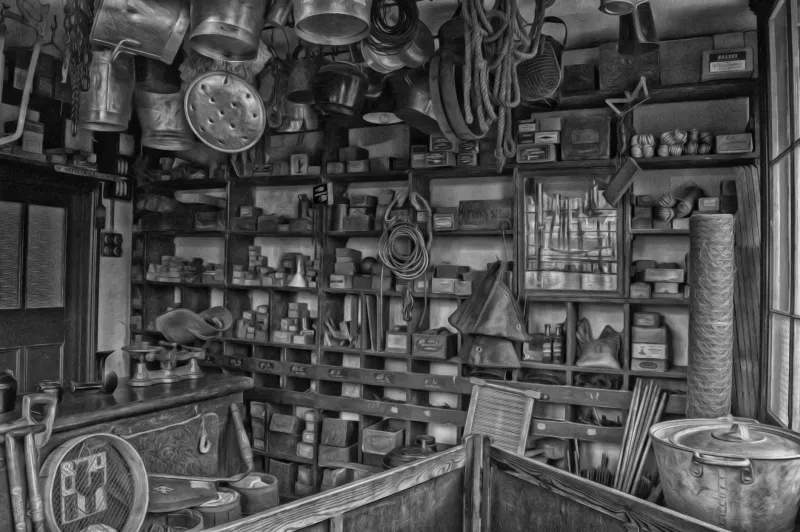
Here's a scene that played out in thousands of American towns for most of the 20th century. A homeowner walks into a small hardware store — maybe it's called Henderson's, maybe it's just "the hardware store on Elm" — holding a broken piece of something. Could be a valve stem, a hinge pin, a piece of window sash hardware, something worn and unidentifiable to anyone who didn't grow up fixing things.
The guy behind the counter glances at it. "That's off a Crane faucet, probably mid-50s. Aisle two, second shelf down. You'll want the rubber washers too — those always go at the same time." He's already walking you there before you've finished saying thank you.
Five minutes later, you're back in your car with the right part, the right advice, and maybe a tip about how to stop the supply line from sweating in summer. Total cost: $1.40.
The Hardware Store as Community Institution
The neighborhood hardware store was never just a retail outlet. It was a knowledge repository disguised as a place that sold screws. The people who staffed these stores — often the owners themselves, or long-term employees who'd been there for decades — accumulated an almost encyclopedic understanding of local housing stock, common repair problems, and product history.
This wasn't incidental. It was the entire value proposition. You didn't go to the hardware store to browse. You went because you had a problem and the person behind the counter had the answer. The inventory was organized around that dynamic. Everything was findable. Everything was labeled. And if you couldn't find it, you asked.
Many of these store owners knew the homes in their neighborhoods almost as well as the families who lived in them. They knew which streets had houses built in the 1920s with galvanized pipe that would need replacing. They knew which subdivision from the 1950s used a specific brand of window hardware that was always failing. They remembered what you bought last spring and could remind you what size bolt you used.
That's not a shopping experience. That's a relationship.
What Big-Box Did to That Relationship
The rise of Home Depot and Lowe's through the 1980s and 90s didn't just change where Americans bought hardware. It changed the entire logic of the transaction. The big-box model is built around scale, low prices, and volume — and those things are genuinely valuable. Nobody is pretending that $4 for a box of fifty screws isn't a good deal.
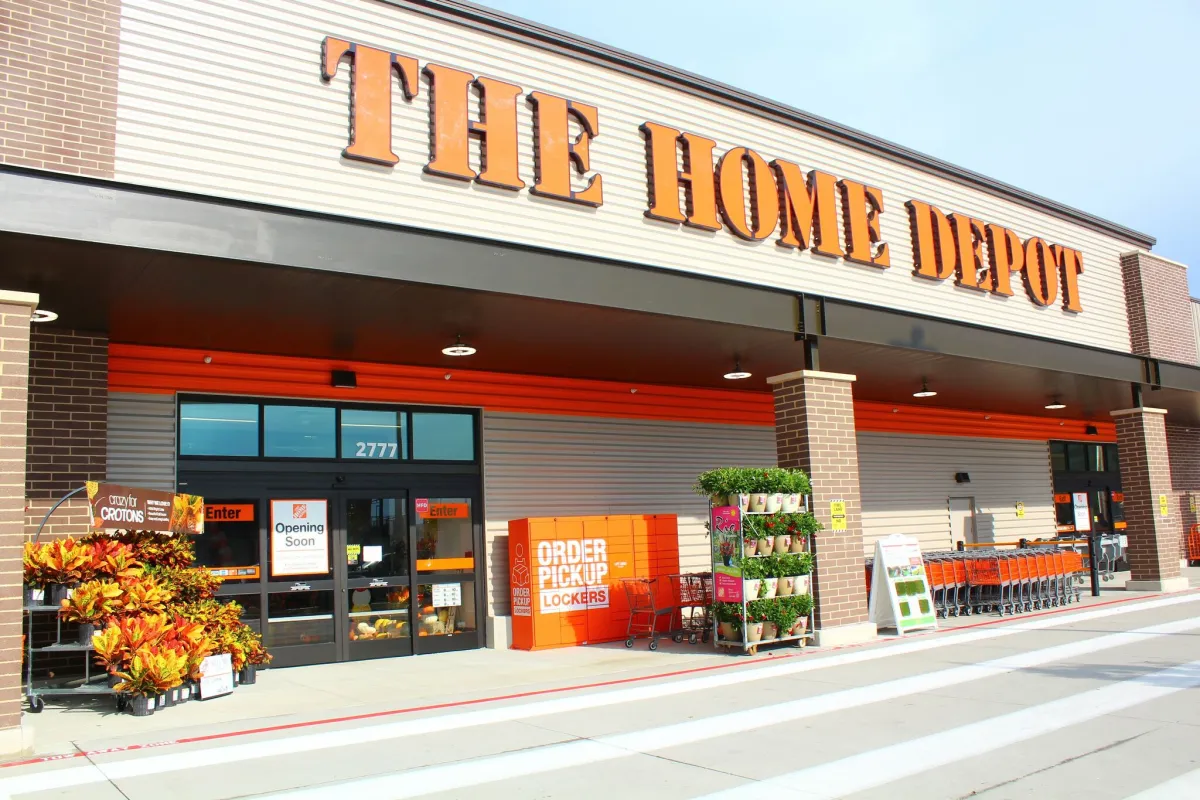 Photo: Home Depot, via s.hdnux.com
But scale requires standardization, and standardization is the enemy of specialized knowledge. A big-box store employs hundreds of people across dozens of departments, many of them part-time, many of them rotating between garden supplies and lumber and plumbing depending on the schedule. The institutional knowledge that used to live in one person's head — the guy who'd been selling hardware in the same building for thirty years — simply doesn't exist at that scale.
Walk into a Home Depot with a broken piece of vintage faucet hardware and you'll likely be directed to an aisle. The aisle will contain many things. Whether any of those things is what you need is largely a matter of luck, personal research, and patience. The orange-aproned employee who meets you there is often doing their best — but their best is usually "let me scan that and see if it comes up in the system."
If it doesn't come up in the system, you're on your own.
The Midnight YouTube Tutorial Era
The internet was supposed to fill this gap, and in some ways it has. YouTube is genuinely remarkable. There are tutorial videos for nearly every home repair imaginable, many of them produced by skilled tradespeople who explain things clearly and well. Online forums like Reddit's r/HomeImprovement have communities of knowledgeable people willing to help diagnose problems. Parts that no local store would ever stock can be ordered online and arrive in two days.
But there's a catch — several, actually.
First, you have to know what you're looking for. The hardware store guy could identify your part from across the counter. Google requires you to describe it, and if you don't know the terminology, the search results will be a maze. "Faucet thingy that controls water" is not a productive search query.
Second, online advice is often contradictory. For every tutorial that says to use plumber's putty, there's another one that says putty will damage your finish and you should use silicone. For every recommendation, there's a counter-recommendation. Without the ability to ask a follow-up question — "but my pipes are copper and the house was built in 1948, does that change anything?" — you're left making judgment calls you're not equipped to make.
Third, there's the waiting. Order the wrong part online and you've lost two days. Order it again and you've lost four. The hardware store guy handed you the right part the first time because he'd seen your exact problem fifty times before.
The Slow Disappearance
The numbers tell the story clearly. The U.S. had over 25,000 independent hardware stores in the early 1990s. By the mid-2010s, that number had dropped by more than half. The ones that survived largely did so by specializing — focusing on paint, or rental equipment, or genuinely obscure parts that the big-box stores don't carry. A few have survived on reputation alone, the kind of places where the waiting list for a consultation is longer than the checkout line.
There's a small revival happening in some cities, where younger homeowners — frustrated by big-box anonymity and bad YouTube advice — have rediscovered independent hardware stores with some nostalgia and genuine need. Some of these newer stores have leaned into the knowledge angle deliberately, staffing up with experienced tradespeople and marketing themselves on expertise rather than price.
It's a promising sign. But it's also a reminder of what was lost — and how long it took most of us to notice it was gone.
What a Hardware Store Actually Was
The neighborhood hardware store was, at its core, a place where a stranger would help you solve a problem. Not because it was their job description, but because they knew the answer and you needed it. That combination — expertise, accessibility, and genuine helpfulness — is surprisingly rare in modern retail.
You can find the answer online eventually. You can order the part and wait. You can watch the tutorial three times and still get it slightly wrong. Or you could have walked in on a Tuesday morning and been back home with the right answer before your coffee got cold.
Some things, it turns out, don't scale.