The $200 Wedding That Actually Worked — Before the Industry Convinced You Otherwise
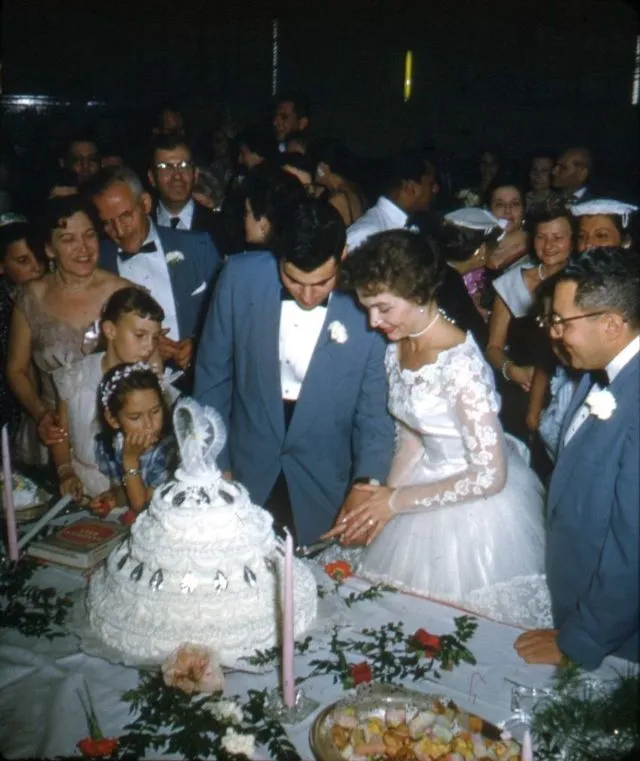
Photo: vintage 1950s backyard wedding reception simple American family, via blogger.googleusercontent.com
Let's start with a number: $35,000. That's the current average cost of an American wedding, according to recent industry surveys. In major metro areas, the figure climbs well past $40,000. Add an engagement ring at the culturally mandated "two months' salary" and a honeymoon to somewhere with a good Instagram backdrop, and you're looking at the better part of a down payment on a house — spent in a single weekend.
Now let's go back about 70 years and meet your great-grandmother.
She got married on a Saturday afternoon. The ceremony was at the church her family had attended for two decades. The reception was in the church hall, or possibly the backyard of her parents' house. The dress was her older sister's, let out slightly at the seams by an aunt who could sew. The food was contributed by neighbors and relatives — a casserole here, a sheet cake there. The whole thing cost roughly what a decent used appliance costs today.
The marriage, in many cases, outlasted almost everything we'd spend $35,000 on now.
What a Wedding Used to Be
For most of American history, a wedding was a community event in the most literal sense. It wasn't a performance staged for guests. It was something the community did together. The labor was shared, the food was shared, the space was shared. Getting married meant being woven into a network of relationships — the neighbors who baked the rolls, the cousins who set up the tables, the church ladies who made sure the flowers were fresh.
The economics reflected this. Working-class and middle-class families in the 1940s and 50s didn't go into debt to get married. The idea would have struck most people as bizarre — starting a marriage with a financial hole seemed like exactly the wrong foot to start on. The celebration was genuine, but it was proportional. It was a party, not a production.
Even into the 1960s and early 70s, the average American wedding was a modest affair by today's standards. A 1960 wedding might involve a church ceremony, a reception with punch and wedding cake, a modest rehearsal dinner, and a honeymoon road trip. The dress might be purchased new, but it was bought to be worn again — perhaps dyed after the wedding, or passed along to a sister.
The idea that a wedding required a professional photographer, a videographer, a florist, a catering company, a venue booking, a wedding planner, a custom cake designer, a DJ, a photo booth, and a choreographed first dance was not yet on the table. Because the table, quite literally, was set by people who knew you.
How the Industry Got Built
The transformation didn't happen all at once. It was gradual, commercially engineered, and remarkably effective.
Bridal magazines were an early driver. Brides magazine launched in 1934 and spent the following decades carefully constructing the idea that a wedding was something to be designed — that it required professional expertise, premium products, and a standard of perfection that could only be achieved through significant spending. By the postwar boom years, the bridal industry had identified a lucrative emotional leverage point: this is the most important day of your life. You don't want to get it wrong.
That framing did a lot of work. It transformed a celebration into a performance with stakes. And once the stakes were established, the upsells followed naturally. You wouldn't want a cheap photographer for the most important day of your life, would you? You wouldn't want ordinary flowers?
Television accelerated things. Celebrity weddings became cultural spectacles. Royal weddings became global events. By the time reality TV arrived — shows like Say Yes to the Dress, Bridezillas, and Four Weddings — the aspirational wedding had become its own entertainment genre, and the entertainment genre had become the benchmark against which real women measured their real weddings.
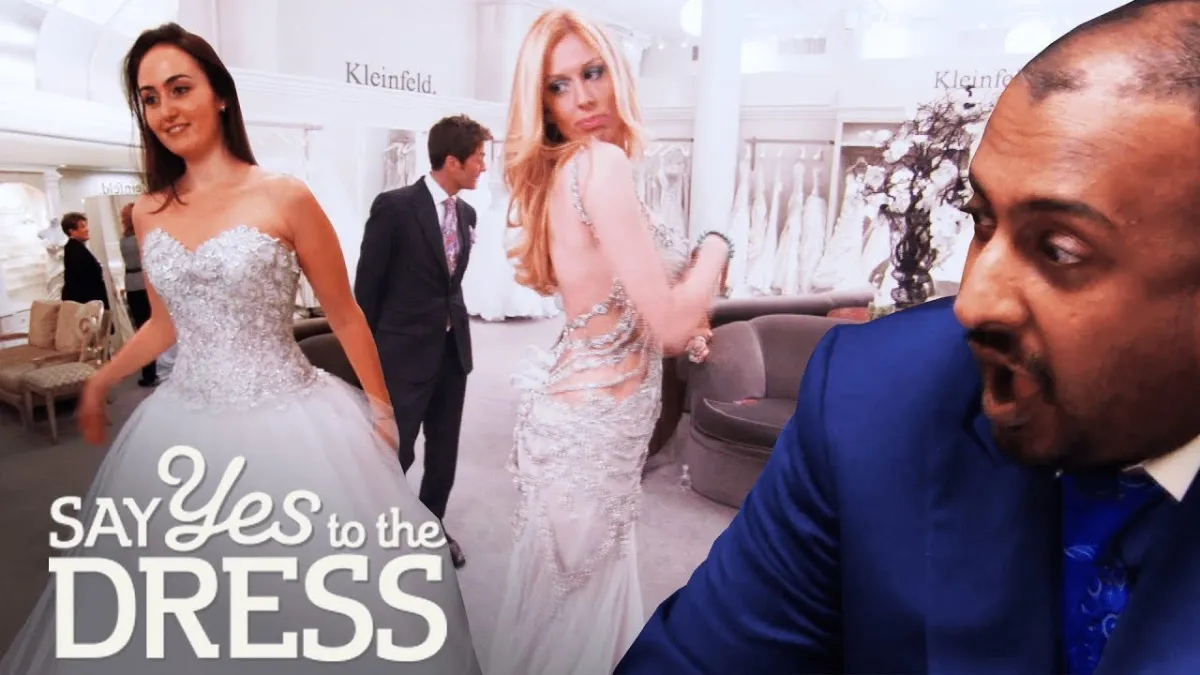 Photo: Say Yes to the Dress, via i.ytimg.com
Social media finished the job. When a wedding becomes content — something to be photographed, shared, and evaluated by hundreds of followers — the incentive structure shifts completely. The wedding is no longer primarily for the couple and their community. It's for the feed. And the feed has high standards.
The Debt Nobody Talks About
Here's the part that doesn't make it into the wedding planning content: a significant portion of American couples start their marriages in debt specifically because of the wedding. Studies have found that couples who spend more on their weddings tend to have shorter marriages — a correlation that researchers attribute partly to the financial stress that follows a large expenditure, and partly to the underlying values that drive the spending in the first place.
Meanwhile, the wedding industry — worth roughly $57 billion annually in the US — has a vested interest in maintaining the emotional architecture that keeps the spending high. The language of the industry is carefully constructed to make any reduction in spending feel like a reduction in love, commitment, or self-worth. Choosing a less expensive venue isn't "practical." It's "settling." A smaller guest list isn't "intimate." It's something you'll regret.
The pressure lands hardest on women, and specifically on young women who have been marinated in wedding content since childhood. The dream wedding is sold early and sold hard. By the time the actual proposal happens, the aspirational template is already installed.
What Was Actually Lost
The backyard wedding and the church hall reception weren't just cheaper. They were different in ways that mattered.
When your neighbors contributed food to your wedding, they had a stake in it. When your aunt altered the dress, she was part of the story. When the reception was in a space your family had used for decades, the wedding was embedded in a history. The community wasn't an audience — it was a participant.
The modern wedding, for all its polish, often has the opposite quality. Guests are audience members at a carefully produced event. The vendors are professionals with no personal connection to the couple. The venue is a blank-slate space rented for the occasion. It's beautiful, often genuinely so. But it floats free of context in a way that the church basement reception never did.
The Question Worth Asking
None of this is an argument that all expensive weddings are hollow or that all modest weddings are meaningful. Plenty of couples spend generously and celebrate genuinely. Plenty of low-budget weddings are joyless obligations.
But it's worth sitting with the question of how we got here. Nobody voted to make weddings a $35,000 event. Nobody sat down and decided that going into debt to fund a single day was a reasonable trade-off. It happened through a slow accumulation of commercial pressure, cultural messaging, and social comparison — and it happened so gradually that it now feels like simply the way things are.
Your great-grandmother's borrowed dress is still out there somewhere, probably in a box in someone's attic. The marriage it launched outlasted the dress by decades.
Maybe the industry didn't sell us a better wedding. Maybe it just sold us a more expensive one.