The ER Used to Cost Less Than a Car Repair — Now It Can Wipe Out Your Life Savings
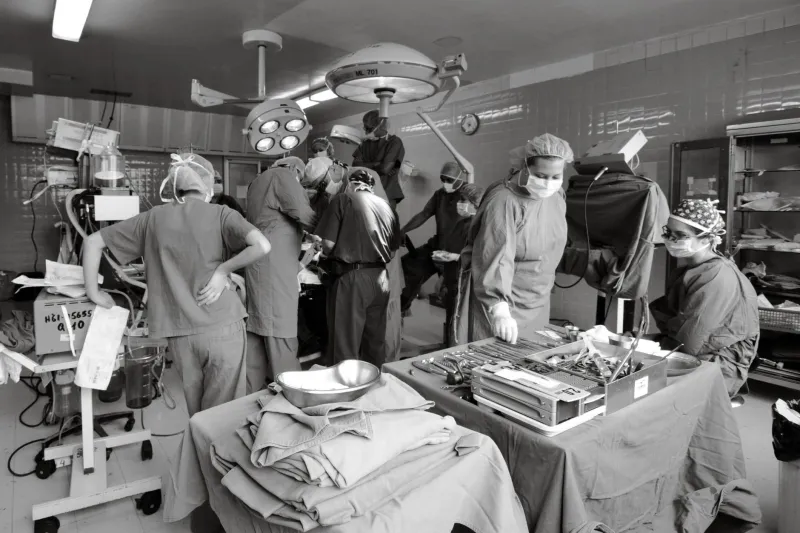
Somewhere around 1962, a seven-year-old named Tommy fell out of a backyard oak tree and snapped his forearm clean. His mother wrapped it in a dish towel, drove him to the local hospital, and sat in a waiting room that smelled like floor wax and cigarettes. A doctor set the bone, applied a plaster cast, and handed Tommy a lollipop. The bill arrived three weeks later. It was $18.
 Photo: Tommy, via logos-world.net
Adjusted for inflation, that's roughly $180 today. Which sounds reasonable until you realize that the same injury — same kid, same tree, same broken arm — would generate an average bill somewhere between $2,500 and $7,500 in a modern American emergency room. And that's before the anesthesiologist sends a separate invoice. Before the radiologist bills you for reading the X-ray. Before the facility fee arrives in a plain white envelope and quietly ruins your week.
Community Hospitals Were Built to Serve, Not to Profit
The hospital system Tommy's mother walked into wasn't designed around revenue cycles. Many American community hospitals in the mid-twentieth century were nonprofit institutions — often church-affiliated, often staffed by physicians who had grown up in the same county where they practiced. Sliding-scale fees were common. If you couldn't pay the full amount, you worked something out with the billing office, which was usually one person sitting behind a wooden desk.
Physicians frequently absorbed costs without a second thought. A doctor who charged a struggling family full price for an emergency visit risked his reputation in a town where everyone talked. Social accountability kept prices honest in a way that no regulation ever could.
Hospitals competed on care and community standing, not on quarterly earnings reports. The idea that a hospital stay might financially devastate a working family would have seemed not just cruel but genuinely bizarre.
Then the System Got Very, Very Complicated
The transformation didn't happen overnight. It started with the explosion of private insurance in the 1960s and 1970s, which introduced a third party — the insurer — into what had been a two-person transaction between patient and doctor. Once insurers entered the picture, hospitals began inflating their listed prices to negotiate down to what they actually expected to receive. Doctors stopped setting their own fees and started billing codes instead.
By the 1980s and 1990s, hospital consolidation had begun in earnest. Independent community hospitals merged into regional health systems. Regional systems merged into national corporations. The billing department grew from one person behind a wooden desk to entire floors of coders, compliance officers, and revenue specialists whose entire job was to extract maximum reimbursement from every single encounter.
The patient, somewhere in this process, stopped being the customer and became the product.
What a Modern ER Visit Actually Costs
Here's what nobody tells you before you walk through those automatic doors: the moment you set foot in a modern emergency room, you are incurring charges that have almost nothing to do with what actually happens to you.
Facility fees — which are essentially a cover charge for existing in the building — can run $500 to $1,500 before a single test is ordered. The emergency physician who sees you is frequently employed by a separate staffing company, meaning they bill you independently and may be entirely out of network even if the hospital itself accepts your insurance. The radiologist who reads your X-ray may be sitting in a different state. The specialist who consults on your case for four minutes gets their own line item.
A 2023 study found that the average emergency room visit for a non-critical condition in the United States costs just over $2,200 out of pocket for someone with insurance. Without insurance, that number climbs past $5,000 for something as routine as a kidney stone or a minor fracture.
 Photo: United States, via www.mappery.com
And surprise billing — receiving a massive invoice from an out-of-network provider you never chose and never even met — remains a genuine threat despite federal legislation passed in 2022, because enforcement is inconsistent and the appeals process is deliberately exhausting.
The Numbers That Should Shock You
Medical debt is now the single leading cause of personal bankruptcy in the United States. That's not a statistic about people who ignored their health for years or made reckless decisions. A significant portion of those bankruptcies trace back to a single unexpected emergency — a car accident, a heart attack, a child's sudden illness — that collided with an insurance policy full of gaps the policyholder didn't know existed.
An estimated 100 million Americans currently carry some form of medical debt. Roughly 41 percent of U.S. adults say they've gone into debt because of medical or dental bills. These aren't people who went to the hospital for elective procedures. Many of them went because they had no choice.
Something Got Lost Along the Way
Tommy's lollipop wasn't just a small kindness. It was a symbol of a system that understood what a hospital was actually for. The doctor who handed it to him wasn't naive about money — he ran a practice and paid his staff. But the transaction was built around the patient's wellbeing first, and the billing came second.
Somewhere between that plaster cast and today's itemized invoice, American healthcare stopped being a community service and became a financial instrument. The broken arm still heals the same way. The bill just looks completely different now — and for millions of families, it never fully goes away.