The Mailman Showed Up Before Breakfast and Again After Lunch — And the Whole Street Knew It
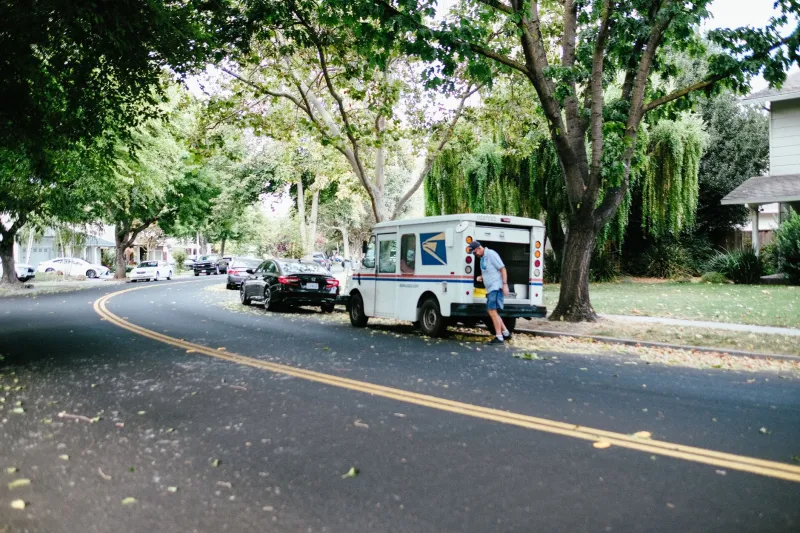
There's a particular kind of waiting that no longer exists in American life. It's the waiting for the mail. Not refreshing a tracking page. Not watching for a push notification. The actual, physical act of listening for footsteps on the porch and the creak of a metal slot.
For most of the twentieth century, that waiting happened twice a day. And it shaped how people experienced time, connection, and information in ways we've almost entirely forgotten.
Two Deliveries, One Unbroken Rhythm
For decades, the United States Postal Service ran two delivery rounds per day in most American cities and towns. The first arrived in the morning — sometimes before 9 a.m. The second came in the early afternoon. In some urban areas during the early twentieth century, there were as many as six daily deliveries.
This wasn't a luxury. It was infrastructure. Business correspondence moved through those rounds the way emails move through servers today — with the expectation of same-day or next-day response. A letter sent in the morning could receive a reply by evening. The postal system was, in every practical sense, the internet of its time.
The twice-daily schedule persisted well into the mid-twentieth century before the USPS quietly began pulling it back. By 1950, two deliveries remained standard in most cities. By the late 1960s, the second delivery had largely disappeared from residential routes. Most Americans didn't notice until it was already gone.
What People Were Actually Waiting For
To understand what was lost, you have to understand what the mail actually carried. Not just bills and catalogs — though those came too — but the substance of people's lives.
Letters from sons serving overseas. Replies from relatives in other states. Results from job applications. Photographs of new babies. Acceptance letters from colleges. Love letters, written by hand, sealed with care, and carried across the country for a few cents.
The mailman knew what kind of week you were having. If you were waiting for news from a sick relative, he knew. If you'd been sending letters to a sweetheart across the country, he'd watched that correspondence develop over months. He wasn't just delivering paper. He was moving the emotional weight of people's lives from one address to another.
There's a reason so many mid-century films use the arrival of a letter as a dramatic pivot. Because it genuinely was one.
The Psychology of Anticipation
Something gets lost when you remove the waiting from communication. Psychologists have a name for the good version of waiting — anticipatory pleasure, the positive emotion that comes from knowing something good is coming before it arrives. A letter you were expecting gave you that feeling twice: once when you knew it was on its way, and again when it finally arrived.
Email collapsed that gap entirely. The response arrives the moment it's sent. There's no interval, no buildup, no second moment of relief. That's efficient. It's also, in a quiet way, a little flat.
The twice-daily delivery amplified anticipatory pleasure by giving you two windows per day to feel it. Miss the morning round? There was still the afternoon. Something was always potentially on its way. The day had a shape built around possibility.
When the Mailman Was Also a Safety Net
In smaller towns and tight neighborhoods, the daily mail carrier was something close to a community institution. Carriers on regular routes learned their customers over years — sometimes decades. They noticed when the mail piled up. They noticed when someone who always came to the door didn't appear. More than a few elderly Americans were found in time because a carrier noticed something was wrong and raised the alarm.
That informal safety net wasn't a policy. It wasn't a program. It was just what happened when the same person showed up at your house every single day and paid attention. The USPS actually ran a formal Carrier Alert program beginning in 1982 that tried to systematize this instinct — a recognition that the daily visit had social value beyond the envelope being delivered.
As routes have grown longer, carrier workloads heavier, and delivery times less predictable, that daily rhythm of presence has thinned considerably. The carrier you see today might not be the same one you saw last week.
The Bill That Changed Everything
It wasn't just email that altered the mail's role in American life. The shift in how people paid bills quietly restructured the entire postal ecosystem.
For most of the twentieth century, paying a bill meant receiving a paper statement, writing a check, and mailing it back. Millions of envelopes moved through the postal system every single day carrying payments. That volume funded operations, justified staffing, and kept the whole machine running at a pace that made twice-daily delivery economically viable.
Online bill pay didn't just move transactions to a screen. It pulled an enormous river of revenue out of the physical mail system. First-class mail volume — the profitable kind — peaked in 2001 at around 103 billion pieces annually. By the early 2020s, it had fallen to roughly half that. The USPS has been restructuring around that collapse ever since.
What Fills the Slot Now
Open your mailbox today and the contents tell a story. Catalogs for companies you've never shopped with. Postcards from real estate agents. Prescription refill reminders. The occasional package slip. And, if you're lucky, a card from someone who still believes in the gesture.
The personal letter — the kind that took time to write and longer to arrive — has effectively ceased to exist as a form of regular communication. Even greeting cards, once a multi-billion dollar industry built on the ritual of mailing something physical for every occasion, have migrated substantially to digital formats.
The mailbox used to be a portal. Now it's mostly a bin.
The Thing About Waiting
We traded the anticipation of the mail for the convenience of instant communication, and most days that trade feels obviously correct. Nobody wants to wait three days to find out if a job offer came through.
But there's something worth sitting with in what we gave up. The twice-daily delivery wasn't just a logistical schedule. It was a rhythm imposed on the day — a structure that said 'something might arrive, and it might matter.' That rhythm is gone. In its place is a continuous, undifferentiated stream of notifications, most of which matter very little, arriving at all hours, from everywhere at once.
We got more. We wait for less. Whether that's progress probably depends on what you think waiting was ever actually for.