Stores Used to Take Your Word for It — Now They Take Your Photo ID and Run It Through a Database
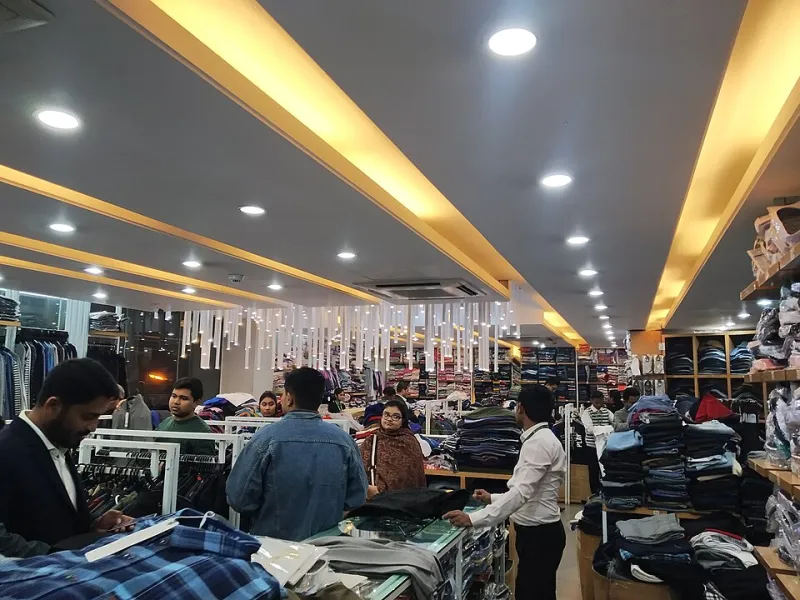
Photo: Aashaa, CC BY-SA 4.0, via Wikimedia Commons
Somewhere between the corner hardware store and the big-box warehouse, something quietly disappeared from American retail. It wasn't a product. It wasn't a price. It was trust.
For most of the twentieth century, returning something you bought was barely an event. You walked back in, explained the situation — maybe the shirt didn't fit, maybe the lamp didn't work — and the person behind the counter took care of it. No form to fill out. No receipt required in most cases. No waiting period. The merchant knew you, or at least knew how to read you, and the transaction reversed itself with about the same energy it took to complete it in the first place.
That world is now so distant it sounds almost fictional.
When the Merchant's Word and Yours Were the Same Currency
Small-town and neighborhood retail in mid-century America operated on a fundamentally different social contract. The shop owner wasn't just a vendor — he was a neighbor, a community fixture, someone whose livelihood depended on your goodwill as much as your wallet. If you came back the following Tuesday with a pair of shoes that fell apart, he wasn't running your name through a database to check your return history. He was handing you a new pair and apologizing for the inconvenience.
This wasn't naivety. It was economics with a longer time horizon. A customer who felt respected came back. A customer who felt interrogated went somewhere else — and told everyone they knew. Word-of-mouth was the only marketing that mattered, and a bad return experience spread fast in a neighborhood where everyone shopped at the same three or four places.
Department stores carried this spirit into the mid-to-late twentieth century, sometimes to extraordinary lengths. Nordstrom built an entire brand identity around the idea that the customer's satisfaction was non-negotiable. Stories — some legendary, some probably embellished — circulated about returns being accepted years after purchase, no questions asked. The policy itself became a selling point. It signaled confidence in the product and respect for the buyer.
Then the Spreadsheets Started Talking
The shift didn't happen overnight. It crept in gradually as retail consolidated, margins tightened, and the personal relationship between buyer and seller became statistically irrelevant at scale.
When a store serves millions of transactions a year, the individual customer stops being a person and becomes a data point. And data points, it turns out, lie. Or at least a small percentage of them do — and that small percentage, multiplied across millions of transactions, adds up to real money. Retailers began calculating the cost of return fraud and building policies designed to stop it.
The result is the system most American shoppers now navigate with varying degrees of frustration. Thirty-day windows. Sixty-day windows, if you're lucky. Original packaging required. Tags must be attached. Receipt mandatory, or at minimum a digital record tied to your account. Some retailers now require a photo of the item before you even ship it back. Others charge restocking fees of ten or fifteen percent — essentially a penalty for changing your mind.
And then there's The Retail Equation. Most shoppers have never heard of it. It's a third-party service used by major retailers including Home Depot, Best Buy, and others that quietly tracks your return history across stores and can flag your account — or outright block your returns — if the algorithm decides you've been returning too frequently. You can be denied a return at a store where you've never once returned anything, simply because your profile elsewhere raised a flag. You won't necessarily be told why.
The Bureaucracy of Bringing Something Back
For online retail, the friction multiplies. A return that once required a two-minute conversation now requires: logging into an account, navigating a return portal, selecting a reason from a dropdown menu, waiting for a return merchandise authorization number, printing a label, repackaging the item, dropping it at a carrier location, and then waiting up to two weeks for a refund that may or may not arrive in full.
Amazon, to its credit, has made this process relatively painless for Prime members — though even that comes with conditions, and the company has been known to quietly flag accounts it considers return-heavy. Third-party sellers on the same platform operate under entirely different and often far less forgiving rules.
Fast fashion retailers have swung the pendulum the furthest. Some now charge return shipping fees that eat substantially into any refund. Others have introduced "final sale" designations so broadly applied that a significant portion of their inventory carries no return option at all. The implicit message to the shopper: be sure before you buy, because we're not interested in being your safety net.
What This Says About the Relationship Between Stores and Shoppers
Return policy is, at its core, a statement about how much a business trusts its customers. The old neighborhood merchant extended trust freely because he knew that most people are honest, and because the cost of treating honest people like suspects was higher than the occasional loss from someone who wasn't.
Modern retail has run the numbers differently. The math says that a small percentage of customers will abuse a generous policy, and that tightening the rules saves money. What the math doesn't easily capture is what gets lost in the process — the goodwill, the loyalty, the sense that the store is on your side.
There's something telling about the fact that the retailers with the most generous return policies still tend to rank highest in customer satisfaction surveys. Costco's return policy remains famously liberal. L.L. Bean, though it tightened its legendary lifetime guarantee in 2018, still offers a one-year no-questions policy that most competitors won't touch. These companies are betting, as the old neighborhood merchant did, that treating customers like adults pays off over time.
Most of the industry has made a different bet. And every time you stand at a returns counter explaining yourself to someone who seems mildly suspicious of your motives, you can feel the cost of that choice — even if it never shows up in a spreadsheet.