The Man Who Knew How You Liked Your Eggs — And Showed Up Anyway
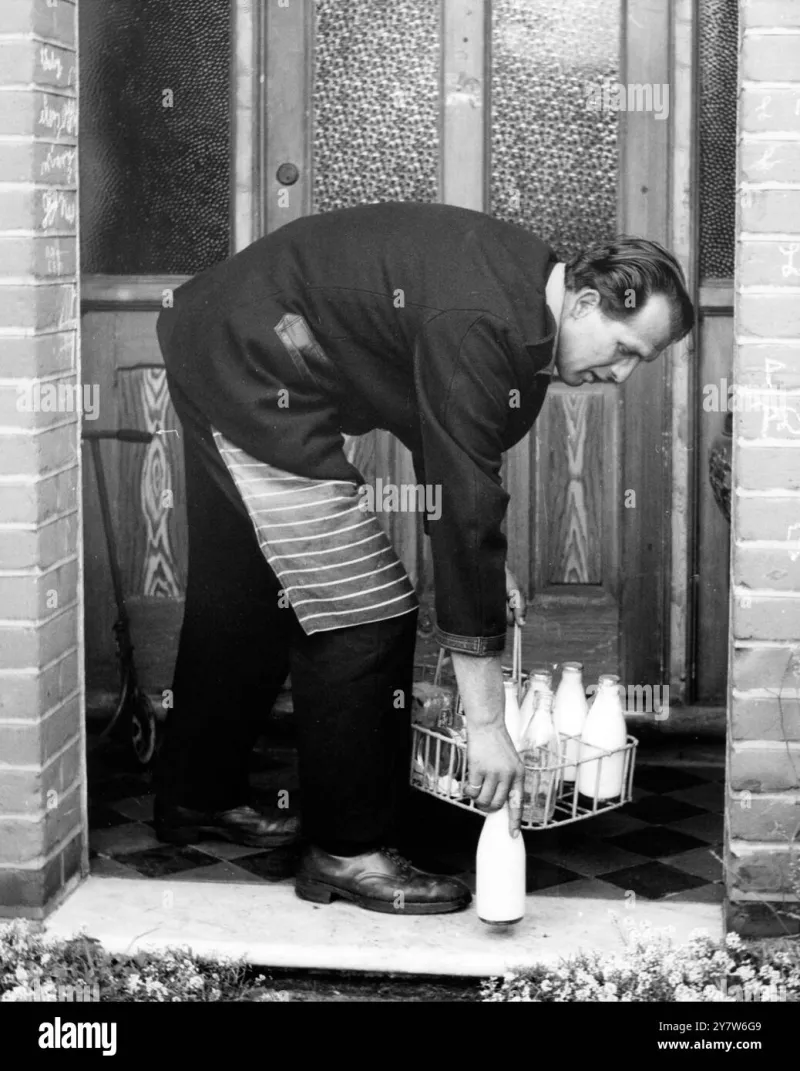
Sometime around 4:30 in the morning, while the rest of the street was still dark and quiet, he was already moving. Glass bottles clinked softly in their wire carrier. The front steps were memorized — third one creaks, skip it. Two quarts of whole milk, one pint of cream for the weekend, and a note tucked under the empty bottle from last Tuesday asking whether he could add a dozen eggs starting next week.
He could. He would. He'd remember without writing it down.
This was the American milkman, and for the better part of a century — from roughly the 1880s through the early 1970s — he was one of the most reliable, most trusted, and most quietly essential figures in the daily life of the country. Then he disappeared so completely that most people under forty have never interacted with one, and most people over sixty have almost entirely forgotten what the relationship actually felt like.
A Route Built on Trust
At the peak of home milk delivery in the late 1940s and early 1950s, an estimated 30 to 40 percent of all milk consumed in American homes arrived at the front door rather than from a store shelf. In dense urban neighborhoods, that number was even higher. In cities like Chicago, Detroit, and Philadelphia, the milkman wasn't a novelty — he was infrastructure.
The economics worked because the relationship was local to an almost radical degree. A milkman typically covered a route of 200 to 400 households, all within a few square miles of a regional dairy. He knew those households the way a mail carrier knows their street — not just the addresses, but the rhythms. Which family had a new baby who needed whole milk switched to skim. Which elderly widow had started leaving her bottles out later because her hip was giving her trouble. Which house had been empty for two weeks because the family was visiting relatives in Ohio.
This wasn't data collected by an algorithm. It was knowledge accumulated through years of showing up, paying attention, and being the kind of person who noticed things.
The Original Subscription Economy — Except It Was Personal
Here's the thing that gets overlooked when people talk about the milkman with nostalgia: the system was genuinely efficient. Not in the sterile, optimized-for-cost-per-unit way that modern logistics companies brag about, but efficient in the way that actually matters to a family trying to get through a week.
You didn't run out of milk. You didn't make an extra trip to the store at 9pm because you forgot. You didn't navigate a subscription app to pause your delivery while you were out of town — you left a note. The milkman read it, adjusted accordingly, and you never had to think about it again.
The payment system was similarly human. Many dairies operated on a weekly or monthly tab, collected in person or left in an envelope with the empties. Credit wasn't a formal process with a score and an approval period — it was an informal understanding between two people who had been doing business together for years. If a family hit a hard month, the milkman often knew before he was told, because the note asking to skip a week said everything.
Why It Ended — And What Replaced It
The milkman didn't die because people stopped wanting milk. He died because the supermarket made a different promise: everything in one place, cheaper, whenever you want it. The postwar explosion of refrigerator ownership meant families could buy in bulk and store it. The car made the weekly grocery run practical in a way it hadn't been for previous generations.
By the late 1960s, home delivery had fallen below 15 percent of the market. By 1980, it was in the low single digits. The last major urban milk routes folded in the early 1990s, and the profession that had employed hundreds of thousands of Americans quietly ceased to exist.
What replaced it was a subscription economy that looks, on the surface, like an upgrade. You can have almost anything delivered to your door now — groceries, prepared meals, wine, pet food, vitamins, razors, specialty coffee. The logistics are extraordinary. The efficiency is real.
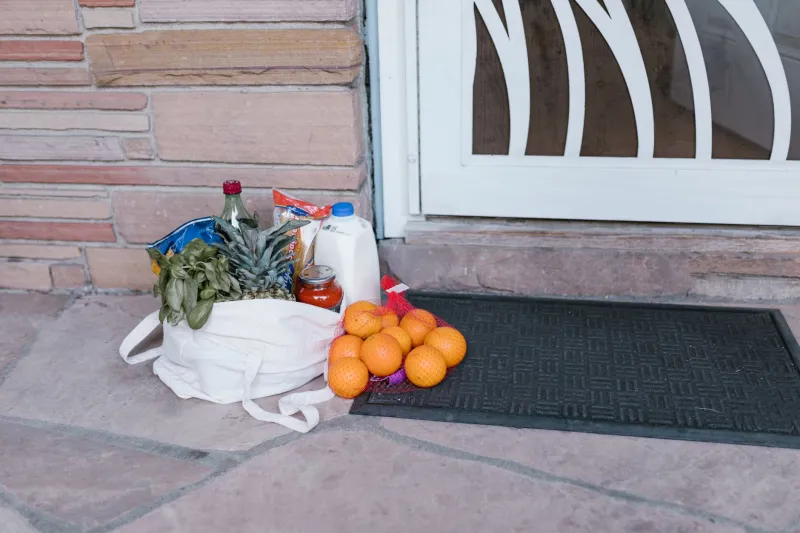
But the man who delivers your meal kit doesn't know your name. He's navigating an app that tells him which door to leave the insulated bag outside of, and he's already three stops behind because the route was optimized by software that doesn't account for the icy front step. There's no note you can leave him. There's no tab. There's no accumulated understanding of your household and its particular needs.
You are a delivery address. You are a recurring charge on a credit card. You are a rating you may or may not leave after the transaction is complete.
What the Milkman Actually Represented
It's tempting to romanticize this — to make it purely about simpler times and community warmth. But the milkman represented something more specific than nostalgia. He was evidence that commercial transactions don't have to be anonymous to be scalable, and that knowing your customer isn't just a marketing strategy — it's a form of genuine care.
The clink of those glass bottles on the front step wasn't just the sound of dairy being delivered. It was the sound of someone who knew you were there, knew what you needed, and had already taken care of it before you woke up.
That's a harder thing to replicate than it sounds. And we haven't really managed it yet.