Dad Had the Hood Up Every Weekend — Now the Hood Stays Down Because Nobody Knows What's Under It Anymore
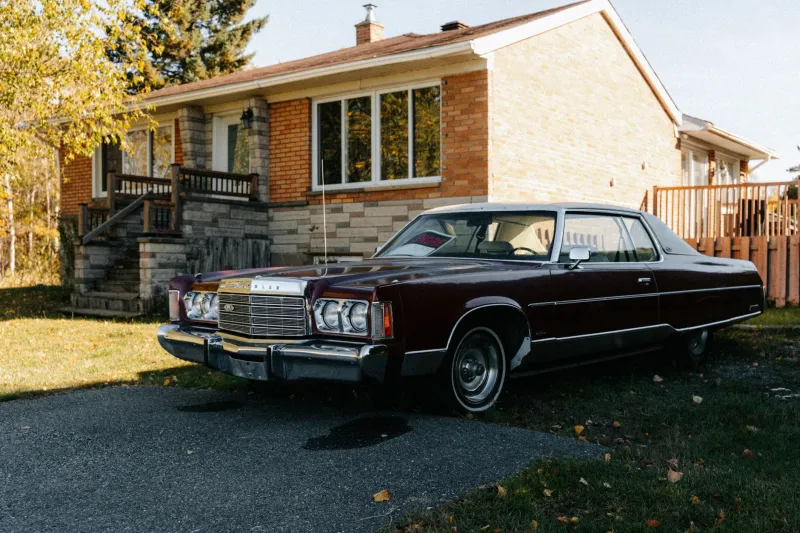
There's a specific smell that a certain generation of Americans associates with Saturday mornings: motor oil, concrete dust, and the faint trace of WD-40 drifting across a suburban driveway. It meant Dad was working on the car. It meant something was broken, and he was going to fix it himself, and it would probably take until late afternoon, and there would be at least one trip to the parts store.
It also meant it was going to get fixed. By a person. With tools you could buy at Sears.
That world has been disappearing for decades, replaced by vehicles so electronically complex that even dealership mechanics sometimes need software updates before they can diagnose a problem. The family car went from a mechanical object to a networked computing device — and it took the whole culture of home repair with it.
When a Car Was Something You Could Actually Know
In the 1960s and 1970s, the American automobile was a relatively transparent machine. Engines were large, accessible, and built with the assumption that someone other than a factory technician might eventually need to work on them. A carburetor could be cleaned and adjusted with a screwdriver and a can of spray cleaner. Brake pads could be swapped in a driveway with a floor jack and a basic socket set. Spark plugs were visible. Oil changes required no special tools, no reset procedures, no software handshake with the car's computer.
More importantly, the cars were built to last — and they did. A well-maintained vehicle from that era could run for 200,000 miles without extraordinary intervention. Owners formed actual relationships with their cars. They knew the quirks, the sounds, the tendencies. And when something went wrong, the diagnosis often started with listening, not plugging in a scanner.
The shade-tree mechanic — that distinctly American figure who fixed his own vehicle, his neighbor's vehicle, and occasionally his brother-in-law's vehicle in exchange for a case of beer — wasn't just a hobbyist. He was a rational response to a machine that made sense.
The Complexity Creep That Changed Everything
The shift didn't happen overnight. Through the 1980s and into the 1990s, emissions regulations, fuel injection systems, and the introduction of onboard diagnostics gradually made modern vehicles harder for amateurs to service. Each change made individual sense. Fuel injection is more efficient than a carburetor. Electronic ignition is more reliable than a distributor. The cumulative effect, though, was a car that increasingly required specialized equipment and proprietary knowledge to maintain.
By the 2000s, the average vehicle contained more computing power than the Apollo spacecraft. By the 2010s, manufacturers had begun using software locks and encrypted systems to ensure that repairs could only be performed — or at least officially documented — by authorized dealers. Replacing a battery in some modern vehicles requires a dealer visit to register the new battery with the car's management system. Changing a headlight bulb on certain models requires removing the front bumper.
This is not accidental design. The automotive industry discovered something the tech industry had already figured out: when you make your product dependent on proprietary service, you create a recurring revenue stream that extends well beyond the initial sale.
What It Costs Now vs. What It Cost Then
In 1975, the average new car cost around $4,250. Adjusted for inflation, that's roughly $24,000 in today's dollars. The actual average transaction price for a new vehicle in the US as of 2024 is closer to $48,000 — nearly double the inflation-adjusted equivalent.
But the purchase price is only part of the story. Maintenance and repair costs have also climbed, partly because so much of what used to be DIY territory now requires a dealer visit. A basic diagnostic scan that used to be free at an auto parts store can now cost $150 at a dealership. Software updates, which are required to maintain full vehicle functionality on many modern cars, are often dealer-only services. And when something goes wrong with the electronics — which happens more frequently in complex systems — the parts and labor costs can be staggering.
The independent mechanic, once a fixture of every American town, is also under pressure. Without access to manufacturer diagnostic software, many independent shops can't service newer vehicles at all. Some manufacturers have actively resisted right-to-repair legislation that would require them to share diagnostic tools and repair data with independent technicians.
The Five-Year Obsolescence Cycle
There's another dimension to this that doesn't get talked about enough: the shrinking useful life of a modern vehicle. Older cars from the 1960s and 1970s didn't just last — they lasted in a way that made them worth maintaining. Parts were widely available, often interchangeable across model years, and cheap enough that repair almost always made more economic sense than replacement.
Today, a car that's ten years old can face parts shortages for discontinued electronic components. Software support ends. Features stop working. Dealers deprioritize older vehicles because they represent less revenue. The economic logic increasingly pushes owners toward replacement rather than repair — which is, of course, exactly what the manufacturers want.
The average age of vehicles on American roads has actually been rising — it's now over 12 years — which suggests that plenty of people are holding onto their cars longer out of financial necessity. But they're doing it in a system that's structurally designed to make that harder.
The Driveway as a Lost Space
Maybe the most underappreciated loss here isn't financial. It's cultural. The driveway mechanic wasn't just saving money. He was doing something — solving a problem, understanding a system, passing on knowledge to a kid watching from a few feet away.
That kind of hands-on competence used to be a normal part of American working-class and middle-class life. You knew your car because you had to. And knowing it meant you weren't entirely at the mercy of someone else's expertise and pricing.
That autonomy is mostly gone now. The hood stays down. The dealer handles it. And somewhere, a software system logs the transaction and flags you for your next scheduled visit.