Little League Used to Be Free — Now It's a Second Mortgage With Cleats
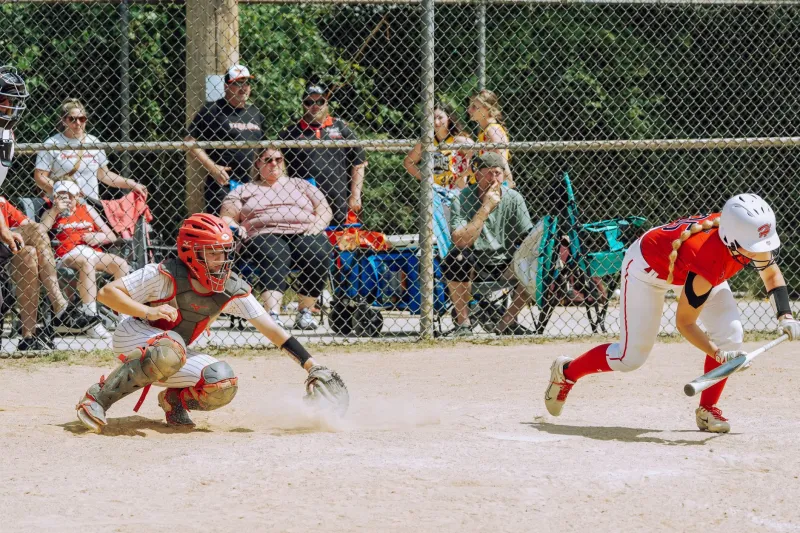
Somewhere in a box in a garage in Middle America, there's a photograph of a kid in a Little League uniform. The uniform probably cost the family nothing. The season registration was a few dollars, maybe free. The coach was the dad who ran the hardware store. The field was maintained by the parks department. The kid just showed up and played.
That world is gone. And the world that replaced it costs a lot more than anyone planned.
The Neighborhood Model and How It Worked
For most of the postwar era, youth activities in the United States operated on a fundamentally public model. Schools funded sports programs, art classes, and music instruction as a standard part of education. Municipal parks departments ran summer leagues, swim programs, and day camps at prices calibrated to working-class budgets — or free entirely. The PTA organized after-school activities. The church ran the youth group. The neighborhood itself was a kind of programming ecosystem.
The assumption underneath all of it was that developing kids — all kids, regardless of what their parents earned — was a shared community investment. A town with a good parks program had healthier, busier, less troubled kids. That was considered worth paying for collectively.
In this model, a child's access to structured activity was only loosely connected to family income. The kid whose father worked at the plant and the kid whose father ran the bank both suited up for the same Saturday morning soccer game. The fee, if there was one, was nominal. The equipment was provided or shared. The playing field was, in the most literal sense, level.
The Slow Defunding of Public Childhood
The erosion started in the late 1970s and accelerated sharply through the 1980s. As municipal budgets tightened under the combined pressure of recession, tax revolts, and shifting political priorities, parks and recreation departments were among the first to absorb cuts. School athletic programs, art classes, and music instruction were trimmed, restructured, or eliminated outright in districts across the country.
The rationale was always fiscal. These were 'extras,' the argument went — nice to have, but not essential. What the argument missed, or chose to ignore, was that the void left by public disinvestment wouldn't stay empty. It would be filled. Just not for free.
Private youth sports leagues, travel teams, and enrichment programs stepped in where public programs stepped back. They were often well-organized, well-coached, and genuinely good for the kids who participated. They were also expensive in ways the old model never was.
When 'Travel Team' Became a Financial Category
If there's a single phrase that captures the transformation of American youth sports, it's 'travel team.' The concept — elite youth squads that compete regionally or nationally, requiring families to fund uniforms, equipment, coaching fees, hotel stays, and tournament entry costs — barely existed before the 1990s. By the 2010s, it had become a dominant structure in youth athletics.
The numbers are striking. A 2019 study by the Aspen Institute found that American families spent an average of nearly $700 per child per year on youth sports — and that figure masks enormous variation. Families with kids on competitive travel teams routinely report annual costs of $5,000, $10,000, or more when you factor in everything. Ice hockey families in particular have become something of a cautionary legend: a single season of competitive youth hockey can run $15,000 to $20,000 in some markets.
Music and the arts followed a similar trajectory. Piano lessons that a working-class family could once afford through a local program now run $60 to $150 per hour in most cities. Private music schools have proliferated as school music budgets have shrunk. The child who might have discovered a talent for the violin through a school program now needs a parent who can write a check to find out.
The Class Divide That Nobody Wants to Name
The most consequential effect of this shift is one that rarely gets discussed directly: the activities that shape childhood, build skills, develop discipline, and show up on college applications have become increasingly stratified by income.
Research consistently shows that participation in organized youth activities correlates with educational attainment, social mobility, and long-term earnings. The activities themselves matter less than the structure, the mentorship, and the experience of sustained commitment they provide. When those activities carry a steep price tag, their benefits flow primarily to families who can afford them.
The child of a family earning $45,000 a year is not competing for the same developmental opportunities as the child of a family earning $150,000 — not because of talent or interest, but because of cost. That gap was always present in American life. The defunding of public youth programming made it dramatically wider.
Scholarship programs exist, and many organizations make genuine efforts to improve access. But scholarships require applications, awareness, and the social capital to navigate systems — resources that aren't evenly distributed either.
The Specialization Trap
Layered on top of the cost problem is a cultural shift toward early specialization that would have seemed bizarre to a parent in 1975. The old model encouraged kids to try different things across different seasons — football in the fall, basketball in the winter, baseball in the spring, swimming in the summer. The variety was considered healthy. The fun was the point.
The modern elite youth sports model pressures families toward year-round commitment to a single sport, often before a child turns ten. The logic is competitive: if your kid isn't specializing early, other kids are, and that means falling behind in the recruiting pipeline that increasingly determines who gets a college scholarship.
That pipeline, it should be noted, is extraordinarily narrow. The NCAA estimates that fewer than 2% of high school athletes receive any athletic scholarship money. The return on a $10,000-per-year travel baseball investment, measured purely in scholarship dollars recovered, is, for most families, essentially zero.
Sports medicine researchers have raised consistent alarms about the injury rates associated with early specialization. The American Academy of Pediatrics has recommended against single-sport specialization before adolescence. The financial and physical incentives pushing families in the opposite direction have largely drowned out those warnings.
What It Costs to Keep Up
For families navigating this landscape today, the pressure is relentless and genuinely difficult to resist. Sitting out of competitive youth sports or premium enrichment programs doesn't feel like a neutral choice — it feels like falling behind. When every other kid in your child's social circle is on a travel team, taking private lessons, or attending summer intensives, opting out carries a social cost alongside the financial relief.
The system has been designed, largely without anyone intending it, to make participation feel mandatory and non-participation feel like deprivation. That's a remarkable transformation from a model where the whole point was that everyone got to play.
Who Pays for the Kids Now
The answer, increasingly, is parents — and only the parents who can. The shared public investment that once funded a child's access to structured activity has been replaced by a private market that efficiently serves families with disposable income and systematically underserves everyone else.
Nobody made a single decision that caused this. It happened through a thousand budget cuts, a hundred market opportunities, and a gradual cultural shift that redefined childhood development as a consumer product rather than a public good.
The kid in that old Little League photograph didn't know how lucky he was. He just showed up and played.