Watching Over Someone's Shoulder Used to Be Enough — Now You Need a Certificate Just to Prove You Can Show Up
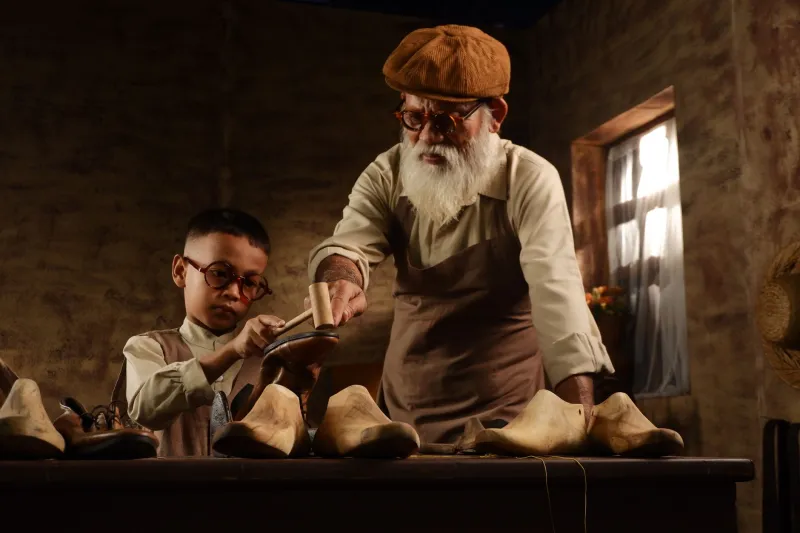
There's a particular kind of knowledge that only comes from watching someone who's done something ten thousand times. The way a carpenter reads a piece of wood before he cuts it. The way a seasoned electrician can hear something wrong in a circuit before he even touches a wire. The way a baker knows the dough is ready not because a timer went off but because her hands told her so.
For most of American history, that's how skills got passed on. Not through coursework. Not through a credentialing body. Through proximity, repetition, and the quiet authority of someone who already knew what they were doing.
That world is mostly gone now. And the replacement is more expensive, more complicated, and — in a lot of ways — less effective.
The Apprenticeship Was America's First Classroom
Before the 20th century formalized everything, the apprenticeship model was how skilled trades worked across the country. A young man — and it was almost always a young man — would attach himself to a craftsman, a tradesperson, or a shopkeeper. He'd sweep floors, fetch materials, watch, ask questions, and gradually be trusted with more responsibility. By the time he was competent, everyone who mattered already knew he was competent. His reputation was built in real time, in front of real people.
This wasn't just informal. Formal apprenticeship programs ran through much of the 19th and early 20th centuries in industries like plumbing, ironwork, printing, and masonry. The structure existed. But the core of it was still the same: learning happened through doing, not through sitting in a room being evaluated on your ability to describe doing.
A kid who wanted to become a mechanic in 1955 could walk into a garage, offer to work for next to nothing, and come out three years later knowing more about engines than most people with a certification do today. A woman who wanted to learn to bake professionally could apprentice at a local bakery, learn the rhythms of a commercial kitchen, and eventually run her own operation — without a single class in food science.
The Credentialing Machine Moved In
Sometime in the latter half of the 20th century, the logic shifted. Credentials became proxies for competence. Licensing boards multiplied. Certification programs appeared in industries where none had existed before. And slowly, the informal pathways that had trained generations of skilled Americans began to close.
Some of this made sense. You probably want your surgeon to have done more than watch a few operations. Standardization in certain fields protects people. Nobody's arguing against that.
But the credentialing impulse didn't stop at medicine and law. It spread to florists. Interior designers. Hair braiders. Tour guides. In some states, you need a government-issued license to be a makeup artist or a home decorator. The Institute for Justice has tracked over 1,800 occupations that now require some form of state licensing — up from just around 70 in the 1950s.
The cost of all this isn't just financial, though that's real enough. The average licensing requirement in the US now demands more than a year of education and training and fees that can run into the thousands. For someone trying to build a career without a lot of upfront capital, those barriers aren't just inconvenient. They're walls.
More Information, Fewer Ways In
Here's the strange irony of where we've landed. There has never been more freely available information about how to do almost anything. You can watch a master carpenter explain joinery techniques on YouTube. You can find detailed instructions for wiring a circuit, fermenting sourdough, or building a piece of furniture — all free, all accessible, all available at midnight in your kitchen.
And yet, in many trades, that knowledge counts for almost nothing without the paperwork to back it up. A person who has spent two years watching tutorials, practicing, and building real things can still be locked out of a licensed profession because they don't have the right credential from the right institution. The knowledge is there. The skills may genuinely be there. But the gate is still closed.
Meanwhile, the credential itself has inflated. Entry-level jobs now require bachelor's degrees that would have been considered overqualified for the same position twenty years ago. Trade schools charge tuition that rivals community colleges. Online certification programs — often run by the same platforms that profit from the anxiety of not being qualified enough — have turned the credentialing arms race into a business model.
What We Actually Lost
The deeper loss isn't just economic access. It's a particular kind of relationship — the one between the person who knows something and the person who wants to learn it.
When a young plumber learned from an older one, something else got transmitted alongside the technical knowledge. Work ethic. Professional judgment. How to talk to a homeowner who was upset. When to push back on a bad design and when to let it go. That stuff doesn't show up on a certification exam. It doesn't fit in a curriculum. It existed in the space between two people, one of whom had been doing this long enough to have made every mistake already.
We traded that relationship for a transaction. Pay for the course. Pass the test. Submit the application. Get approved.
Some trades have held on. Union apprenticeship programs in the electrical and plumbing industries still mix formal training with real on-the-job hours, and they're among the better examples of how the old model and the new one can coexist. But they're the exception, not the rule.
For most skilled work, the path from curious beginner to recognized professional now runs through an institution of some kind — and the institution always has a price of admission.
The person who could have learned it by watching? They're still out there. They're just not allowed in the door.