When Love Letters Took Three Weeks to Arrive and Actually Meant Something
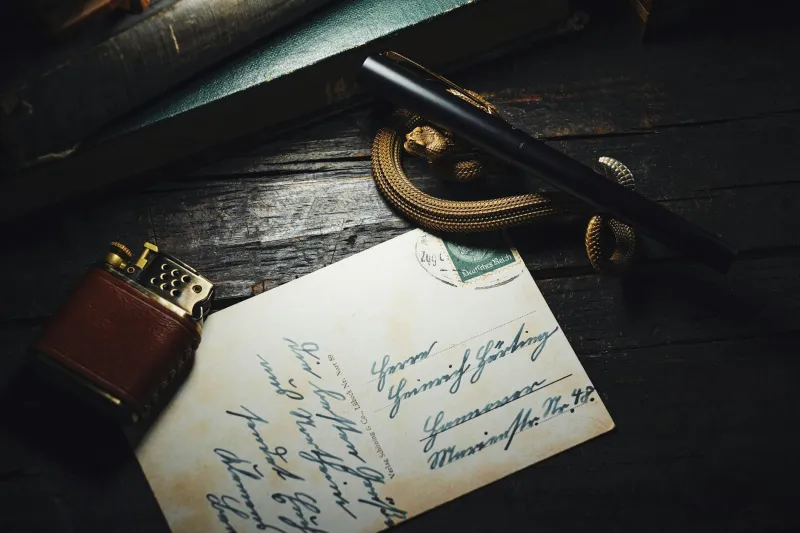
When Love Letters Took Three Weeks to Arrive and Actually Meant Something
Picture this: You're madly in love with someone who lives two states away. To tell them how you feel, you sit down with a fountain pen, carefully choose your words, and pour your heart onto paper. Then you fold it, seal it in an envelope, walk to the post office, and wait three weeks for a response. If you're lucky.
This wasn't some romantic fantasy — this was how Americans communicated for most of our history. And weirdly enough, it might have been better than what we have now.
The Lost Art of Putting Pen to Paper
In 1950, the average American household sent and received about 600 pieces of personal mail each year. That's nearly two letters every single day. Compare that to today, when the typical person receives maybe a dozen handwritten notes annually — and half of those are probably thank-you cards from your grandmother.
Back then, letter writing wasn't just communication; it was an event. Families gathered around the kitchen table on Sunday evenings for "letter night." Parents wrote to distant relatives, teenagers penned dramatic declarations to summer camp crushes, and soldiers overseas sent home pages and pages describing life in places their families could barely pronounce.
The tools mattered too. People owned real stationery — not just any old paper, but letterhead with their name embossed at the top. They had favorite pens, preferred ink colors, and specific rituals for sealing envelopes. Some even used wax stamps, because why not make opening a letter feel like unwrapping a gift?
When Waiting Was Half the Fun
Here's what we've completely forgotten: anticipation used to be enjoyable. When you mailed a letter from New York to California in 1955, you knew it would take at least a week to arrive and another week for a response. So you waited. You checked the mailbox every day with genuine excitement. You planned what you'd write next while walking to work.
That waiting period did something magical to relationships. It gave people time to think, to miss each other, to build up genuine anticipation. When a letter finally arrived, reading it was an experience. You'd find a quiet spot, open it carefully, and savor every word. Some people read love letters dozens of times, keeping them in special boxes for decades.
Contrast that with today's instant gratification culture. We send a text and expect a response within minutes. If someone doesn't reply to our Instagram DM within an hour, we assume they're ignoring us. We've trained ourselves to need constant validation and immediate feedback. The idea of waiting two weeks to hear back from someone? That would literally give modern people anxiety attacks.
The Weight of Words
When writing a letter required genuine effort — finding paper, sitting down, thinking through your thoughts, walking to a mailbox — people chose their words carefully. You couldn't just fire off whatever random thought popped into your head. You had to mean what you said.
This led to some surprisingly beautiful correspondence. Regular people wrote like poets because they had time to craft their thoughts. A factory worker in Detroit could pen a letter to his sweetheart that would make Shakespeare weep. Teenagers wrote thank-you notes that were actual works of art.
Look at letters from the 1940s and 1950s, and you'll find everyday Americans using vocabulary and sentence structure that would impress college professors today. They weren't trying to sound fancy — they just had time to think about what they wanted to say and how they wanted to say it.
The Physical Memory of Love
Here's something we've completely lost: the physicality of communication. A handwritten letter isn't just words on a screen — it's a physical object that someone's hands created specifically for you. You can see where they pressed hard with the pen when they were excited, where their handwriting got sloppy when they were tired, where they crossed out words and started over.
People kept love letters in shoeboxes under their beds. They carried folded notes in their wallets until the paper wore thin. They could recognize their spouse's handwriting from across the room. These weren't just messages — they were physical pieces of the people they loved.
Now we have text messages that disappear, emails that get deleted, and social media posts that vanish into the digital void. We're constantly communicating but creating no permanent record of our relationships. Future generations will have no idea how we felt about each other because everything we write gets lost in the cloud.
What We Gained (And What We Lost)
Don't get me wrong — instant communication has obvious benefits. We can stay in touch with people across the globe, share news immediately, and maintain relationships that would have been impossible in the letter-writing era. Emergency communication alone has saved countless lives.
But we've also lost something profound. We've lost the art of thoughtful communication, the pleasure of anticipation, and the romance of physical objects created by hand. We've gained speed and convenience while sacrificing depth and meaning.
Maybe that's why handwritten notes feel so special now. When someone takes the time to write you an actual letter, it feels almost revolutionary — not because the words are necessarily better, but because the effort itself communicates something that no text message ever could.
In a world where we can instantly connect with anyone, anywhere, anytime, perhaps the most romantic thing you can do is slow down, pick up a pen, and write like it's 1955.