When Getting Pulled Over Meant Coffee and a Chat — How America's Friendly Traffic Cops Became Digital Robots
When Getting Pulled Over Meant Coffee and a Chat — How America's Friendly Traffic Cops Became Digital Robots
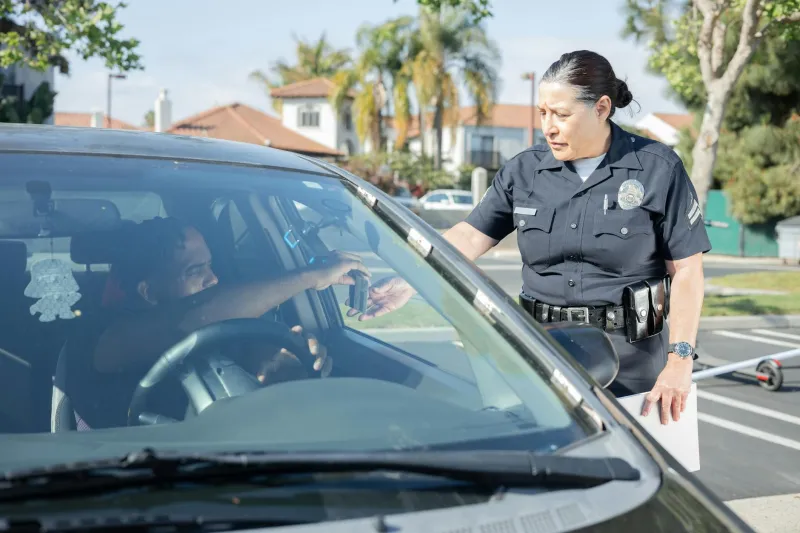
Picture this: You're cruising down Main Street in 1963, maybe doing 35 in a 25 zone, when you spot the familiar figure of Officer Murphy in your rearview mirror. Your heart skips a beat, but not from panic — from the mild embarrassment of disappointing someone you probably see at church on Sundays. Murphy pulls you over, ambles up to your window with that measured small-town pace, and after a brief chat about your kids and the weather, sends you on your way with a friendly warning and maybe directions to the new diner across town.
Fast-forward to today, and that same stretch of road might be monitored by three speed cameras, two license plate readers, and a patrol car equipped with automated citation software that can write you a ticket faster than you can say "I'm sorry, officer."
The Human Touch That Actually Worked
Back in the day, traffic enforcement was personal. Really personal. The local sheriff knew your family, your job, and probably your driving record by heart. Getting pulled over wasn't just about breaking the law — it was about disappointing someone who might live three streets over from you.
This wasn't some Norman Rockwell fantasy, either. Small-town and even big-city cops operated with enormous discretion. A 1961 study found that police officers issued warnings instead of citations in roughly 60% of traffic stops. Compare that to today, where automated systems issue citations with 100% consistency, no questions asked, no circumstances considered.
The old system had its problems, sure. Enforcement was wildly inconsistent. What got you a warning on Tuesday might earn you a ticket on Friday, depending on the officer's mood, the weather, or whether the monthly quota was breathing down the precinct's neck. But it was undeniably human.
When Technology Promised to Fix Everything
The shift started innocently enough in the 1980s. Cities struggling with budget shortfalls and rising accident rates looked to technology as a solution. Why not use cameras to catch speeders? Why not automate the whole process? It would be fair, consistent, and profitable.
And profitable it was. Red light cameras alone generate over $1 billion annually for American cities. Speed cameras add hundreds of millions more. What started as a public safety measure quickly became a revenue stream that many cities can't afford to lose.
The technology kept evolving. License plate readers can now scan thousands of plates per hour, cross-referencing them against databases of wanted vehicles, unpaid tickets, and expired registrations. Some cities use predictive algorithms to determine where to deploy enforcement resources. Others have experimented with AI-powered systems that can detect everything from phone use to seatbelt violations.
The Surveillance State on Four Wheels
Here's where things get genuinely unsettling. Modern traffic enforcement isn't just about catching speeders anymore — it's about creating a comprehensive surveillance network that tracks your movements, records your behavior, and builds a digital profile of your driving habits.
Your license plate gets photographed dozens of times during a typical commute. These images aren't just used for immediate enforcement — they're stored in databases that can track your movements across months or even years. Some systems can identify the make, model, and color of your vehicle, while others use facial recognition to identify drivers and passengers.
The old Officer Murphy couldn't follow you home, couldn't track your daily routines, and definitely couldn't build a detailed profile of everywhere you'd been in the past six months. Today's digital enforcement systems can do all of that and more, often without you ever knowing it happened.
What We Lost When We Gained Efficiency
Don't get me wrong — the old system had serious flaws. Enforcement was often unfair, with some drivers getting away with dangerous behavior while others faced harsh penalties for minor infractions. Personal relationships sometimes mattered more than public safety, and in some communities, your last name or the color of your skin could determine whether you got a warning or a ticket.
But we also lost something important when we replaced human judgment with algorithmic certainty. We lost the ability to explain, to apologize, to learn from a mistake without it following us for years. We lost the community connection that made traffic enforcement feel like a shared responsibility rather than a predatory system designed to extract money from unsuspecting drivers.
The Price of Perfect Enforcement
Today's traffic enforcement is undeniably more consistent than it was fifty years ago. A camera doesn't care if you're having a bad day, running late for a job interview, or rushing to the hospital. It treats everyone exactly the same way — which sounds fair until you realize that life itself isn't consistent or fair.
The financial impact is staggering too. Where Officer Murphy might have sent you home with a warning and a story to tell your spouse, today's automated systems generate citations that can cost hundreds of dollars and stay on your record for years. For many Americans, a single traffic camera citation can mean choosing between paying the fine and paying rent.
The Road We're On Now
So here we are, traveling down roads monitored by invisible eyes, where every mile is measured and every infraction is recorded. It's efficient, it's profitable, and it's utterly impersonal. Whether it's actually making us safer is still up for debate, but there's no question it's making someone money.
The next time you see a speed camera or get a citation in the mail from a system you never interacted with, take a moment to remember Officer Murphy and his coffee-and-chat approach to traffic enforcement. We might not want to go back to the inconsistencies of the past, but maybe we can find a middle ground between the friendly wave and the surveillance state.
After all, the road ahead looks a lot different when there's a human being walking toward your window instead of a camera watching from the shadows.