The Operator Connected Your Call — And the Clock Started Ticking on Your Wallet
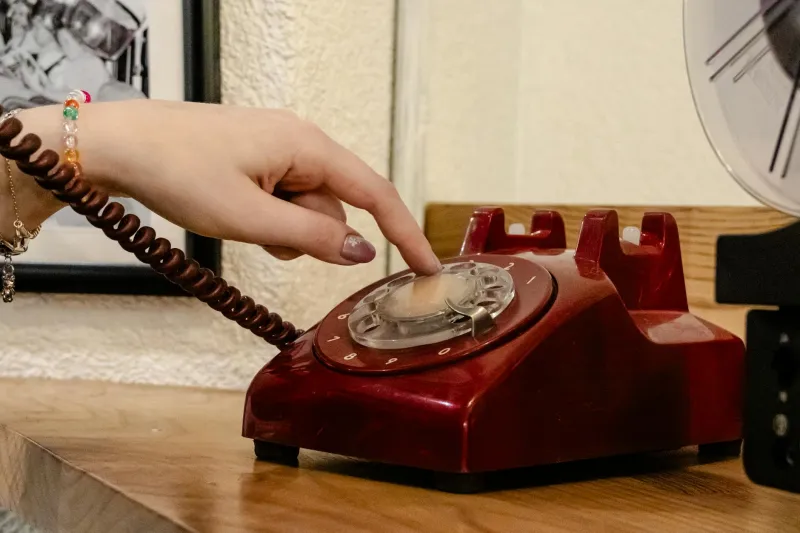
The Operator Connected Your Call — And the Clock Started Ticking on Your Wallet
Imagine needing to talk to your sister in California, but first you have to pick up the phone and ask a human operator to connect you. Then imagine waiting. Then imagine watching the minutes tick by knowing each one costs you money — real money, the kind that made you think twice about whether this conversation was worth it.
This wasn't ancient history. This was how Americans communicated across state lines until surprisingly recently.
When Distance Meant Expense
In the 1950s and 1960s, making a long-distance call was a production. You didn't just dial. You called the operator — a real person sitting at a switchboard — and told them the number you wanted to reach. The operator would manually connect your call through a series of telephone exchanges, each one routing your voice through physical wires and switches across the country. If you were calling from New York to Los Angeles, your voice traveled through multiple states, each connection managed by humans.
And you paid for every second of it.
A three-minute call from New York to Los Angeles in 1960 cost about $1.15 during the day — roughly $12 in today's money. But here's the thing: most people didn't make calls during the day. They waited until after 9 p.m., when the "night rate" kicked in, dropping that same three-minute call to around 45 cents (about $5 today). Families would plan their long-distance calls like military operations, timing them for the cheaper hours, keeping conversations brief, and often scheduling them in advance so the person on the other end would be home and ready.
This wasn't paranoia or cheapness. For a working family in the 1960s, a weekly long-distance call to relatives could easily cost $20 to $30 a month — money that might have gone toward groceries, rent, or savings.
The Operator Always Knew Your Business
There was another layer to this: privacy didn't really exist. The operator who connected your call could hear parts of your conversation. In small towns, operators were often people you knew — your neighbor, someone from church. They knew who was calling whom, when, and how long they talked. Rural operators sometimes became inadvertent gossips, their switchboard the nerve center of local information flow.
If you wanted to call someone long-distance, you also had to know their number. There was no way to look it up yourself across state lines. You either had to call directory assistance (which also cost money), write a letter and wait for a response, or hope you had the number written down somewhere.
Want to call a hotel in another state to make a reservation? You'd call the operator, ask for directory assistance for that city, wait while they looked it up, and then ask the operator to connect you. Multiple transactions, multiple costs, all building up.
The Scheduled Call
For important conversations — a family emergency, a job interview, coordinating a major decision — people often scheduled "person-to-person" calls. You'd tell the operator the specific person you wanted to reach, and they'd only connect the call if that person answered. If the wrong person picked up, you could hang up before the timer started. This cost more, but it saved you from paying for a call to someone who couldn't help you.
Otherwise, you made "station-to-station" calls, which connected whoever answered. Either way, the operator was in control. They managed the timing, the connection, and the billing.
What Changed (And When)
Direct dialing — where you could call long-distance without an operator — started rolling out in 1951, but it took decades to become standard. Even into the 1970s and 1980s, many people still used operators for long-distance calls, especially in rural areas. The real shift came with long-distance deregulation in 1984 and the rise of fiber optic cables, which made transmitting calls across the country cheap enough that flat rates and unlimited calling became possible.
By the 1990s, the idea of paying per minute for a long-distance call started feeling quaint. By the 2000s, it was nearly extinct.
Today, you can video call someone on the other side of the world for free. You can do it instantly, without scheduling, without an operator, without thinking about it. You can call someone in Tokyo, London, or Sydney as easily as calling someone in the next town — and it costs you nothing beyond your regular internet bill.
The Distance Disappeared
What's genuinely strange about this shift is how completely it has rewired our sense of geography and intimacy. When long-distance calls were expensive and difficult, distance mattered. It created a real barrier between you and people far away. Calling your cousin across the country was an event. You prepared for it. You made it count.
Now, distance is almost meaningless. You can casually text someone in Australia. You can hop on a video call with someone in London without thinking about it. The friction is gone.
In some ways, that's purely good — we're more connected to people we love regardless of where they live. In other ways, it's changed something about how we relate to geography and to the intentionality of communication. Your grandparents had fewer people they could easily reach, but the act of reaching them meant something.
Today, we reach everyone, all the time, and somehow that makes distance feel like it never really existed at all.