Before the Supermarket, Americans Bought Dinner From Five Different Vendors — Every Single Day
Before the Supermarket, Americans Bought Dinner From Five Different Vendors — Every Single Day
Walk into any American supermarket today and you're surrounded by choice: 300 types of cereal, 100 salad dressings, produce from six continents, frozen meals ready in minutes, bulk sections, organic aisles, and prepared foods. One building. One trip. Everything.
Your great-grandmother couldn't have imagined this. Neither could she have imagined wanting it.
The Daily Food Ritual
In the early 20th century, feeding a family was a logistical puzzle solved through a network of specialized vendors. A typical day might look like this:
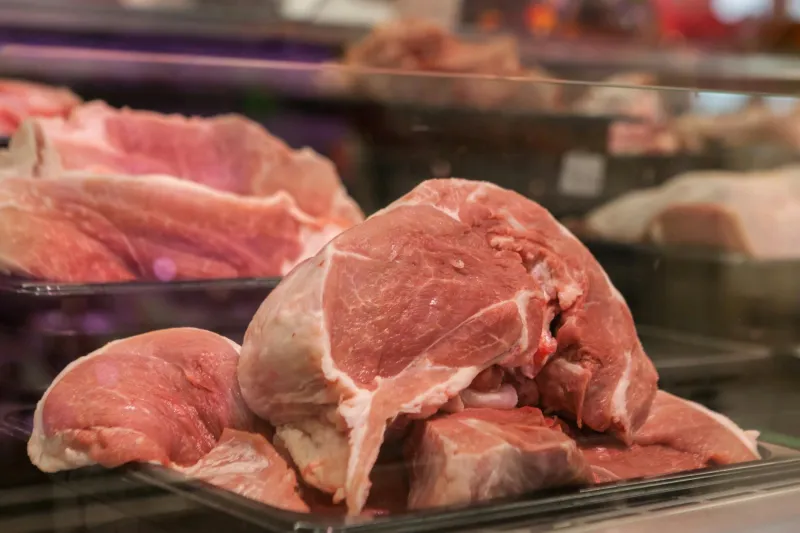
You'd start at the butcher shop in the morning, where you'd buy meat for that day's dinner — maybe a pound of ground beef or a few pork chops. The butcher would grind or cut it fresh while you waited. You couldn't buy much because you had nowhere to store it. Your icebox (if you were lucky enough to have one) could hold food for maybe a day or two, and only if you bought fresh ice regularly from the iceman, who would deliver a 25- or 50-pound block that you'd place in a wooden cabinet with a drain pan underneath.
Next stop: the bakery, where you'd buy bread — usually that morning's loaf, because bread didn't keep long without preservatives (which barely existed). If you were baking at home, you'd buy flour, sugar, and leavening from the general store.
Then came the produce stand or the green grocer, where you'd buy whatever was in season. In winter, your options were limited to root vegetables and whatever had been stored in a cellar. Fresh oranges in January? Only if you lived in the South or were wealthy enough to afford imported fruit. Tomatoes in December? Absolutely not. You either canned them in summer or did without.
You might also visit the dairy to buy milk, cream, and butter — or wait for the milkman to deliver to your door early in the morning. Eggs came from a chicken farmer or the general store. Anything else you needed — salt, spices, sugar, canned goods — came from the general store or a specialty shop.
All of this happened multiple times per week. Shopping wasn't a weekly ritual; it was a daily or every-other-day necessity.
Why You Couldn't Buy Much
Refrigeration is the invisible revolution nobody thinks about. Before electric refrigerators became standard in American homes (which didn't happen until the 1940s and 1950s), food storage was a constant problem.
Ice iceboxes required daily ice delivery. If you missed the iceman or couldn't afford it, your food spoiled. Meat had to be bought fresh or preserved through salting, smoking, or canning. Milk soured quickly. Vegetables wilted. Bread molded. Butter went rancid.
This meant you couldn't stock up. You couldn't buy a week's worth of groceries. You bought what you needed for that meal or the next day, and you bought it from whoever specialized in that item.
The Neighborhood Economy
This system created a different kind of neighborhood life. You knew your butcher. He knew your family's preferences — how you liked your meat cut, whether you wanted the fat trimmed or left on. The baker knew whether you preferred rye or wheat bread. The milkman was a regular fixture, arriving before dawn, leaving bottles on the porch.
These weren't just transactions. They were relationships. The butcher might give you bones for soup. The baker might save you yesterday's bread at a discount. The grocer would extend credit to families he knew, and you'd pay weekly or monthly.
There was also a class element: wealthier families had servants or housemaids who did the shopping. Middle-class women spent hours per week managing the food supply. Working-class families often had less flexibility and made do with cheaper cuts and whatever was available.
The Supermarket Arrives
The first true supermarket is generally considered to be King Kullen, which opened on August 4, 1930, in Queens, New York. It was revolutionary: a large, self-service store with separate departments for produce, meat, and dairy, all under one roof, with ample parking and low prices.
But supermarkets didn't catch on everywhere immediately. Even in the 1940s and 1950s, many Americans still shopped at neighborhood butchers and bakers. The real transformation happened in the 1960s and 1970s, when suburban sprawl, car culture, and the rise of chain supermarkets made the old system economically obsolete.
By the 1980s, the neighborhood butcher was a relic. By the 2000s, many people had never shopped at one.
What We Gained
The modern supermarket is a genuine miracle of logistics. A typical supermarket carries 30,000 to 50,000 products. You can buy strawberries in January, salmon from Alaska, olive oil from Italy, and Thai curry paste — all in one trip, all year-round. Prices are low because of scale and efficiency. You can feed a family on a single shopping trip once a week. Food lasts longer because of refrigeration and preservatives. Meal planning is easier because ingredients are available when you need them.
This has freed up enormous amounts of time. Your great-grandmother spent hours every week shopping for food. You spend maybe one or two hours. That's time you can spend working, relaxing, or doing literally anything else.
What We Lost
But something shifted. When food shopping became a once-a-week errand at a massive, impersonal store, the relationship between people and their food changed.
You no longer know where your meat comes from or how it was raised. You don't talk to the person who grew your vegetables. You don't plan meals around what's in season; you buy whatever you want whenever you want it. Food became a commodity, processed and packaged, often traveling thousands of miles to reach you.
We also lost a certain kind of neighborhood life. The butcher, the baker, the milkman — they were anchors of community. Their disappearance coincided with the decline of walkable neighborhoods and the rise of car-dependent suburbs.
And there's something about the abundance that can feel paralyzing. With infinite choice, deciding what to eat becomes harder, not easier. We buy more than we eat. We waste more food than people in the 1930s could have imagined. We've traded the constraint of scarcity for the anxiety of abundance.
The Nostalgia Trap
It's easy to romanticize the old system — the relationship with the butcher, the seasonal eating, the neighborhood community. But it's important to remember that it was also a system of real constraints. You couldn't eat strawberries in winter. You couldn't easily feed a large family on a small budget. Many people were malnourished. Food poisoning from spoilage was common.
The supermarket solved real problems. It made food affordable, safe, and available to everyone.
But in solving those problems, it created new ones: disconnection from food sources, loss of community, environmental costs of industrial agriculture, and a kind of abundance that doesn't always make us happier.
Today, some people are trying to get back something from that old system — shopping at farmers markets, buying from local butchers, eating seasonally. It's a small movement, a luxury for people with time and money. But it suggests that maybe, just maybe, something was lost when we gained everything.