When a Broken Faucet Was a Saturday Morning Project, Not a $300 Emergency
The Saturday Morning Fix-It Ritual
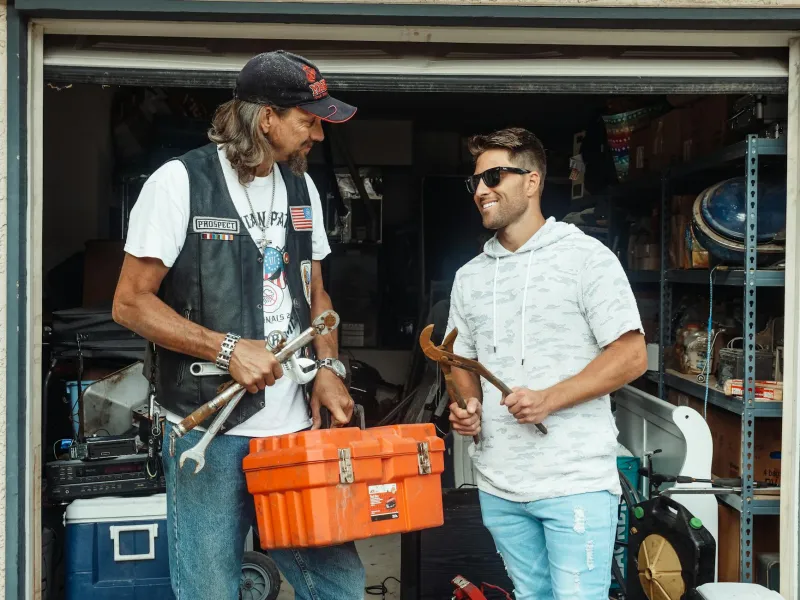
Every weekend in 1955, American garages came alive with the sound of hammering, sawing, and the occasional creative curse word. Dad would spread out his tools on the workbench while Junior held the flashlight and learned which end of a screwdriver to use. Mom would be upstairs refinishing a dresser she'd bought unfinished for $12, planning to transform it into something that would last thirty years.
This wasn't a hobby. This was how households functioned.
When the kitchen faucet started dripping, nobody called a plumber. You shut off the water, unscrewed the handle, replaced the washer, and had it working before lunch. When a chair leg wobbled, you didn't buy a new dining set — you glued it, clamped it, and moved on. When the car wouldn't start, you popped the hood and started checking spark plugs.
These skills weren't special talents. They were basic adult competencies, like cooking or balancing a checkbook.
The Economics of Self-Sufficiency
In the postwar era, labor was expensive and materials were cheap. A service call from a repairman could cost a day's wages, but lumber, hardware, and replacement parts were affordable. The economic incentive structure pushed families toward self-reliance.
Most American homes had workshops in the basement or garage, stocked with hand tools that lasted generations. A good hammer, a set of wrenches, and a collection of screwdrivers could handle 80% of household maintenance. These tools were wedding gifts, passed down from father to son, and built to outlast their owners.
Furniture stores sold unfinished pieces specifically for home completion. Sears and Montgomery Ward catalogs included detailed instructions for building everything from kitchen cabinets to backyard sheds. The assumption was that customers had basic woodworking skills and access to common tools.
 Photo: Montgomery Ward, via i.ytimg.com
Even women were expected to handle repairs. Home economics classes taught girls how to rewire lamps, patch drywall, and refinish furniture alongside cooking and sewing. The idea that home repair was "men's work" would have seemed absurd to a generation where everyone contributed to household maintenance.
Learning by Necessity
Skills were transferred through apprenticeship within families. Children learned by watching, holding tools, and gradually taking on more responsibility. By age twelve, most kids could paint a room, change a tire, or help dad install new kitchen cabinets.
This wasn't formal education — it was cultural transmission. Fathers taught sons (and often daughters) how to use tools because that's how their fathers had taught them. The knowledge flowed naturally from one generation to the next, reinforced by constant practice and economic necessity.
Community played a role too. Neighbors helped neighbors with bigger projects, sharing tools and expertise. Barn raisings and home construction were community events where multiple families contributed labor and knowledge. Everyone learned from everyone else.
The Specialization Revolution
The shift began in the 1970s and accelerated through the 1980s. Rising incomes made professional services more affordable. Suburban development created neighborhoods without the multi-generational families that had traditionally passed down practical skills. Women entered the workforce in larger numbers, reducing the time available for household projects.
More importantly, the economy shifted toward specialization. The same forces that made it efficient for people to focus on their careers rather than growing their own food also made it logical to hire specialists for home repairs rather than learning to do everything yourself.
Appliances became more complex and less repairable. Modern washing machines require computer diagnostics, not mechanical intuition. Cars developed electronic systems that couldn't be fixed with basic tools. The technology advanced faster than amateur skills could keep up.
The Rise of the Service Economy
By the 1990s, home repair had become a professional industry. TaskRabbit, Angie's List, and eventually dozens of apps emerged to connect homeowners with specialists for every conceivable task. What used to be weekend projects became billable hours.
The economics reversed completely. Now labor is relatively cheap (thanks to gig work and global competition) while high-quality materials and tools are expensive. It often costs less to hire someone to fix something than to buy the tools needed to fix it yourself.
Modern homeowners pay $150 for a handyman to spend thirty minutes replacing a toilet handle that costs $8 and requires no special skills. They hire furniture assembly services to put together IKEA bookcases that come with illustrated instructions. They call electricians to change ceiling light fixtures that require only a screwdriver and fifteen minutes.
The YouTube Generation
Ironically, we now have access to more instructional information than any generation in history. YouTube contains detailed tutorials for every possible home repair, often with better explanations than the old printed manuals. Yet Americans are less likely than ever to attempt these repairs themselves.
The difference is confidence and context. Previous generations learned these skills gradually, in low-stakes situations, with experienced mentors nearby. Today's homeowners face the choice between watching a video and potentially making an expensive mistake, or paying a professional to guarantee the work gets done right.
Without the foundation of basic tool skills and mechanical intuition, even simple repairs feel overwhelming. A generation that can troubleshoot computer problems and navigate complex software struggles to understand why a door won't close properly or how to stop a running toilet.
The Cost of Dependency
This shift has profound economic implications. The average American household now spends over $3,000 annually on home maintenance and repairs — money that previous generations kept in their pockets by doing the work themselves. These aren't major renovations; they're basic upkeep tasks that used to be handled with weekend labor.
More concerning is the psychological dependency. When your garbage disposal stops working, your immediate impulse is to find your phone and call someone rather than looking under the sink to see if something's stuck. We've trained ourselves out of the troubleshooting mindset that previous generations considered normal.
This creates vulnerability. Families that can't perform basic repairs are at the mercy of service availability and pricing. During busy periods or emergencies, they may wait days for simple fixes that could be completed in minutes with basic skills.
What We've Gained and Lost
The modern service economy offers undeniable benefits. Professional work is usually faster, more reliable, and often comes with warranties. Specialists have better tools, more experience, and can handle complex problems that would stump amateurs.
Specialization also freed up time for other pursuits. Instead of spending weekends fixing things, families can pursue hobbies, travel, or simply relax. The opportunity cost of learning home repair skills may be higher than the cost of hiring professionals.
But something intangible was lost in the transition. The satisfaction of fixing something with your own hands. The confidence that comes from understanding how things work. The independence of not needing to call someone for every minor problem.
Perhaps most importantly, we lost the cultural expectation that adults should be competent with basic tools and repairs. This knowledge was once considered as fundamental as reading or driving — a basic life skill that every functioning adult possessed.
The New Normal
Today's twenty-somethings are more likely to know how to code than how to use a drill. They can navigate complex software but struggle to hang a picture frame. They understand digital troubleshooting but are baffled by mechanical problems.
This isn't necessarily worse — it's different. The skills that matter have shifted along with technology and economics. But it represents a fundamental change in how Americans relate to their physical environment and their own capabilities.
We've become a nation of specialists who excel in narrow areas while depending on others for everything else. It's more efficient in many ways, but it's also more fragile. When the handyman can't come for three days, the leaky faucet becomes a crisis instead of a Saturday morning project.
Our grandparents would be amazed by our smartphones but baffled by our helplessness with a screwdriver.