America's Great Indoors Migration — How Air Conditioning Killed the Front Porch
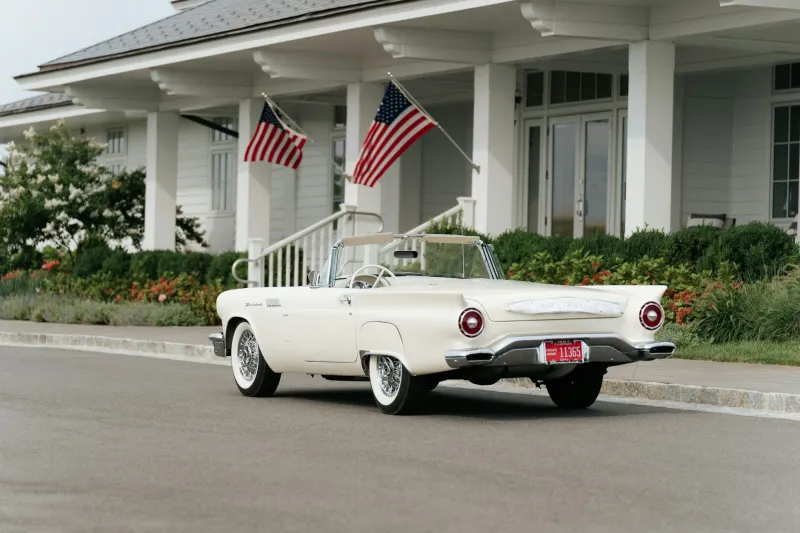
The Great Outdoor Summer
Picture Chicago in July 1955. As the sun sets and the temperature refuses to drop below 85 degrees, something magical happens across the city. Doors open, families emerge, and the real life of the neighborhood begins.
Front porches fill with families seeking relief from stifling indoor heat. Children play elaborate games of hide-and-seek that span entire blocks. Adults drag chairs onto sidewalks, creating impromptu social clubs that last until well past midnight. On the hottest nights, entire families sleep on fire escapes, rooftops, and in public parks.
This wasn't quaint Americana — it was survival. And it accidentally created the most social period in American history.
When Heat Forced Community
Without air conditioning, summer evenings belonged to the outdoors. Families had no choice but to seek relief wherever they could find it, and that search inevitably led to interaction with neighbors. Mrs. Rodriguez would share her homemade lemonade with the kids next door. Mr. Johnson would help fix Mrs. Patterson's broken porch swing. Teenagers would gather around someone's transistor radio, listening to baseball games under the stars.
These weren't planned social activities — they were the natural result of a shared predicament. Everyone was hot, everyone needed air, and everyone ended up in the same place: outside.
Neighborhoods developed their own rhythms. Children knew which porches welcomed them and which yards were off-limits. Adults formed loose networks of mutual aid that operated through casual conversation rather than formal organization. Information traveled at the speed of gossip, and problems got solved through collective action.
The Cooling Revolution
Room air conditioners existed in the 1950s, but they were expensive, noisy, and energy-hungry. Only about 10% of American homes had any form of air conditioning in 1960. Central air was virtually unheard of in residential settings.
That changed rapidly through the 1960s and 70s. Mass production drove costs down while suburban home construction made central air standard. By 1980, more than half of American homes stayed cool all summer long. By 2000, that number reached 80%.
The transformation happened so gradually that nobody noticed what was disappearing. Families simply began spending summer evenings indoors, watching television in climate-controlled comfort instead of chatting with neighbors in the humid night air.
The Unintended Consequences
Air conditioning solved the obvious problem — unbearable summer heat — but created subtler issues that took decades to recognize. As families retreated indoors, the social fabric that had been woven through necessity began to unravel.
Front porches, once the command centers of neighborhood life, became decorative afterthoughts. New suburban homes were built with tiny porches or none at all, their living spaces oriented toward private backyards rather than public streets. The shift was so complete that many Americans today can't imagine why anyone would want to sit on their front porch.
Children's play moved from the streets and sidewalks into air-conditioned houses, where video games and television provided entertainment that didn't require negotiating with other kids or learning the complex social rules of neighborhood life. Parents, no longer forced outside by the heat, lost the casual oversight that had once kept entire neighborhoods safe.
What We Gained and Lost
The benefits of air conditioning are undeniable. Heat-related deaths plummeted. Productivity soared as workers no longer wilted in stifling offices. The elderly and chronically ill could survive summers that would have been unbearable in earlier eras.
Air conditioning also enabled the growth of the Sun Belt. Cities like Phoenix, Houston, and Miami became year-round destinations rather than seasonal outposts. The American economy gained trillions in productivity from workers who could focus on their jobs rather than simply surviving the heat.
But the social costs were real, if harder to measure. Studies consistently show that Americans today know fewer of their neighbors than previous generations did. We're more likely to feel isolated, less likely to participate in community activities, and more dependent on formal institutions to solve problems that were once handled informally.
The Architecture of Isolation
Modern American homes reflect our retreat from public life. Garages face the street while front doors hide behind landscaping. Windows are smaller and positioned higher, designed for privacy rather than connection with the neighborhood. Air conditioning made it possible to live entirely separate from our surroundings, and American architecture embraced that possibility wholeheartedly.
The change was so thorough that many young Americans today feel uncomfortable sitting on a front porch, unsure of the social rules that once governed these spaces. The art of casual conversation with neighbors has atrophied through disuse.
Beyond Nostalgia
This isn't an argument for returning to sweltering summers — air conditioning is one of the great improvements in human comfort and health. But understanding what we traded away helps explain some of the social challenges we face today.
The loneliness epidemic that mental health experts warn about didn't emerge in a vacuum. It developed, in part, because we eliminated many of the casual social interactions that once happened automatically. When everyone was forced outside by the heat, community wasn't something you had to work at — it was something that happened to you.
The Modern Challenge
Today's Americans must consciously create the social connections that once formed naturally through shared discomfort. We join fitness classes, organize neighborhood watch groups, and plan community events to achieve what our grandparents got simply by stepping outside on a hot evening.
Some communities are rediscovering the value of shared public space. Farmers markets, food truck gatherings, and outdoor movie nights attempt to recreate the casual mixing that once happened on every block. But these efforts require organization and intention in ways that the old front porch culture never did.
The Lesson of Comfort
Air conditioning represents a broader truth about technological progress: every solution creates new problems, often in areas we never anticipated. We gained comfort and lost community. We eliminated suffering and accidentally eliminated some sources of connection.
The goal isn't to reject progress but to understand its full cost. When we make life easier, we should ask what valuable difficulties we might be eliminating along with the genuine hardships. Sometimes the things that force us together are the things that make us human.