When Police Tickets Were Pocket Change — How America's Parking Meters Became Debt Traps
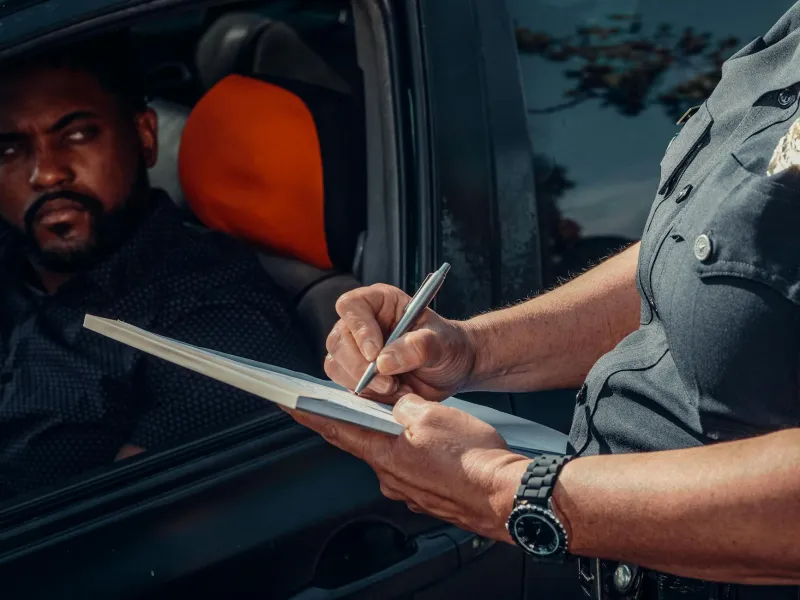
The Good Old Days of Getting Caught
Picture this: It's 1962, and you're running late for a date downtown. You park in front of a fire hydrant, dash into the restaurant, and return two hours later to find a crisp white ticket tucked under your windshield wiper. The fine? Fifty cents. You dig two quarters from your pocket, drop them in the mail with the ticket, and forget about it forever.
That was it. No court dates, no processing fees, no license suspension threats. Traffic violations were exactly what they claimed to be: minor inconveniences designed to keep order on the roads.
Fast forward to today, and that same fire hydrant violation could cost you $150 in New York City, $200 in San Francisco, or $75 in smaller towns — before the fees kick in. Miss the payment deadline? Add a $25 late fee. Contest it and lose? That's another $15 processing charge. Let it sit too long, and your $75 ticket becomes a $300 nightmare that can suspend your license and wreck your credit score.
When Fines Actually Made Sense
In the 1950s and 60s, traffic fines followed a simple philosophy: make the penalty sting just enough to discourage repeat behavior, but not so much that it ruins someone's month. A speeding ticket typically ran between $5 and $15, equivalent to about $50 to $150 in today's money. But here's the kicker — that's actually less than what many jurisdictions charge now, even without adjusting for inflation.
The system was refreshingly straightforward. Police officers carried books of pre-printed tickets with standard fines listed right on them. Speed through a school zone? That's $10. Park in a no-parking zone? Two bucks. Run a red light? Five dollars, thank you very much.
Most importantly, paying was the end of it. No bureaucratic maze, no cascading penalties, no computer systems tracking your every infraction across multiple agencies. You paid your fine, learned your lesson (or didn't), and moved on with your life.
The Birth of the Traffic Industrial Complex
Something fundamental shifted in the 1980s and 90s. Cash-strapped municipalities discovered that traffic enforcement wasn't just about public safety — it was a goldmine. Cities began viewing traffic violations as revenue streams rather than behavioral correction tools.
The transformation was gradual but relentless. Base fines crept upward year after year. Then came the fees: processing fees, court costs, administrative charges, and "technology surcharges" to fund new computer systems. Some jurisdictions added fees for paying online, fees for paying by phone, even fees for requesting a payment plan.
By the 2000s, many cities had created entire departments dedicated to maximizing traffic revenue. They hired consultants to optimize ticket pricing, installed cameras at intersections with unusually short yellow lights, and deployed meter maids with quotas that would make door-to-door salesmen blush.
The Modern Debt Spiral
Today's traffic enforcement system operates more like a loan shark operation than a public safety measure. Miss a payment, and the penalties multiply faster than interest on a payday loan. A $50 parking ticket can easily balloon to $500 within six months through late fees, collection charges, and administrative costs.
Worst of all, unpaid tickets now follow you everywhere. They can suspend your driver's license, prevent you from renewing your vehicle registration, damage your credit score, and even result in arrest warrants in some jurisdictions. In Ferguson, Missouri, the Department of Justice found that traffic enforcement had become so aggressive that some residents faced arrest for owing as little as $151 in unpaid fines.
The system hits low-income Americans hardest. While a $200 speeding ticket might be annoying for a middle-class family, it can be devastating for someone living paycheck to paycheck. Studies show that traffic debt is a leading cause of license suspension among low-income drivers, creating a vicious cycle where people lose their ability to get to work because they can't afford to pay fines.
The Hidden Tax Nobody Talks About
What we're really witnessing is the creation of America's most regressive tax system. Unlike income taxes or sales taxes, which are debated publicly and subject to democratic oversight, traffic fines operate in the shadows. City councils quietly raise parking meter rates and fine amounts with little fanfare, knowing most residents won't notice until they get hit personally.
The numbers are staggering. Americans now pay over $7 billion annually in traffic fines and fees, according to research by the Fines and Fees Justice Center. That's more than the entire GDP of some small countries, extracted one parking ticket at a time.
Some cities have become so dependent on traffic revenue that it represents 20% or more of their annual budgets. This creates a perverse incentive structure where public officials have financial motivation to keep citation rates high, regardless of actual public safety needs.
What We Lost Along the Way
The old system wasn't perfect, but it understood something important: traffic violations are minor infractions, not felonies. They deserved minor punishments, not life-altering consequences.
When a speeding ticket cost less than a tank of gas, it served its intended purpose — a gentle reminder to slow down. When it costs more than a week's groceries and comes with the threat of license suspension, it becomes something else entirely: a tool of economic oppression disguised as public safety.
The next time you see that familiar white envelope tucked under your windshield wiper, remember what it used to represent: a simple transaction between citizen and state, resolved with pocket change and quickly forgotten. Those days feel like ancient history now, but they were really just yesterday in America's long story.