We All Heard the Same Broadcast — Now We Each Live Inside a Different Version of Reality
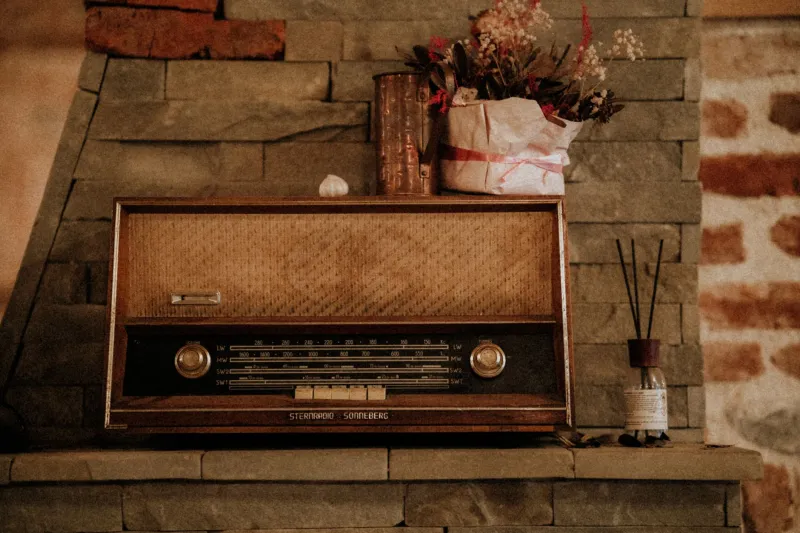
Picture a Tuesday evening in 1955. Across the country, families are finishing dinner, the dishes are being cleared, and the radio or the early television set is warming up. In living rooms from Maine to California, a significant portion of America is about to hear the same news anchor, read the same headlines, and absorb roughly the same picture of what happened in the world that day.
Nobody called it a "shared information environment." They just called it the news.
The Era of the Common Broadcast
For most of the 20th century, information arrived through a small number of channels. Morning newspapers. Evening radio. Later, the nightly television news. The options were limited by design — not by any conspiracy, but simply because broadcasting infrastructure was expensive and spectrum was finite.
Walter Cronkite signed off every CBS Evening News broadcast with "And that's the way it is." That phrase sounds almost quaint today. But in its time, it reflected something genuinely true: a large majority of the country had just watched the same program, heard the same stories presented in the same way, and walked away with a reasonably similar understanding of the day's events.
The same dynamic played out in radio. From the 1920s through the 1960s, major network radio broadcasts reached tens of millions of Americans simultaneously. When something significant happened — a war update, a presidential address, a national disaster — the country experienced it together, in real time, through the same voice.
This created something valuable that was almost invisible at the time: a common factual baseline. You might disagree with your neighbor about what the government should do about a situation. But you generally agreed on what the situation was.
The Crack in the Mirror
The fracture started gradually. Cable television in the 1980s introduced more channels and more choices. Talk radio exploded in the late 1980s and 1990s, offering edgier, more opinionated alternatives to traditional broadcasting. The 24-hour news cycle changed the rhythm of information from a daily summary to a constant stream.
But the decisive break came with the internet, and more specifically, with the smartphone and the social media algorithm.
The algorithm is the key piece that most people don't fully think through. It isn't just a tool that delivers content you might enjoy. It's a system specifically designed to maximize your engagement by learning what provokes a strong reaction in you — and then feeding you more of it. Outrage keeps people scrolling. Confirmation of existing beliefs keeps people engaged. Nuance and contradiction tend to make people click away.
So the algorithm quietly sorts each user into a personalized information stream, curated not by journalists or editors with professional standards, but by a machine optimizing for attention. Two people sitting at the same kitchen table, both scrolling through their phones, may be consuming entirely different pictures of what is happening in the world.
What the Dinner Table Lost
There's a practical social consequence to this that goes beyond politics, though politics is where it shows up most visibly.
When Americans shared a common information environment, disagreements tended to be about values and priorities — what the country should do, given a shared understanding of what was happening. Those arguments could be heated, but they operated from a common foundation of agreed-upon facts.
Today, a growing share of American disagreements are about basic reality itself. Not "what should we do about this problem?" but "is this problem even real?" Not "how do we interpret this event?" but "did this event happen the way you say it did?"
That's a fundamentally different kind of disagreement, and it's much harder to resolve. You can negotiate values. It's nearly impossible to negotiate facts when two people are drawing on entirely different sources that each insist they hold the truth.
Family gatherings, workplace conversations, even casual exchanges between neighbors have developed a new kind of tension — not just political disagreement, but a more disorienting experience of feeling like you and the person across from you are describing different worlds.
The Personalization Trap
Here's the part that trips people up: personalized information feels good. It feels efficient. Your feed shows you things you care about, perspectives you find interesting, content that resonates with your existing worldview. It's comfortable in the way that only ever talking to people who agree with you is comfortable.
But comfort isn't the same as accuracy. And a media environment that tells each person exactly what they want to hear, in the emotional register most likely to keep them engaged, is not an environment optimized for truth. It's an environment optimized for clicks.
Walter Cronkite had editors, fact-checkers, journalistic standards, and a professional reputation to protect. The algorithm has none of those things. It has engagement metrics.
What We Actually Lost
The old broadcast model had real problems. It was narrow, often exclusionary, and reflected the biases of a small number of gatekeepers. More voices and more perspectives in public discourse is genuinely valuable.
But something was lost along with the gatekeepers. The shared experience of a common news broadcast wasn't just about information — it was a form of social cohesion. It was evidence that, whatever your differences, you and your neighbor were living in the same country, watching the same world unfold.
Now the radio doesn't tell you what's happening. Your phone tells you what to think about a version of events selected specifically to keep you emotionally activated and scrolling.
And the neighbor with the different phone? They're getting a completely different story.