Everyone on the Block Knew Everyone's Business — Now We're Global Strangers Who Can't Name the Person Next Door
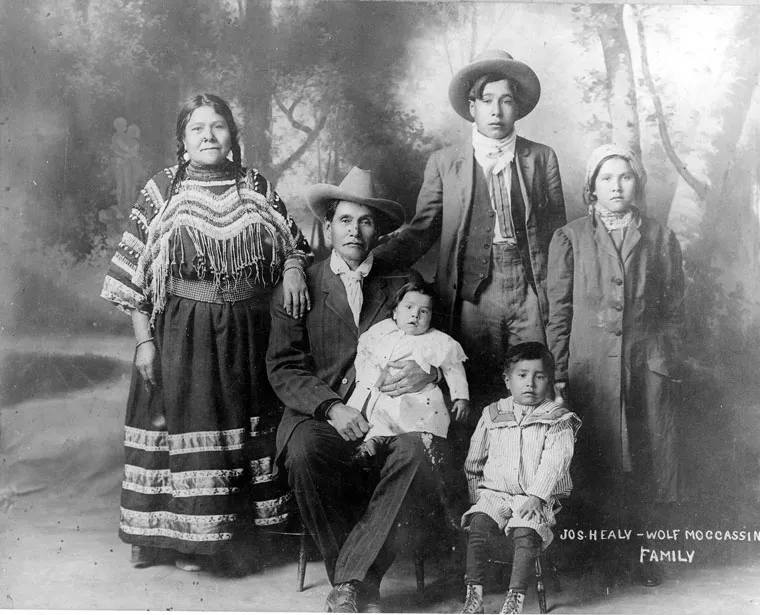
Somewhere in a box in your parents' attic, or maybe your grandparents', there's probably a photograph of a block party. Folding tables set up across a closed-off street. Kids running between yards. Adults standing in clusters, talking to people they've known for fifteen years. Nobody is looking at a phone. Not because phones didn't exist, but because there was nowhere else they needed to be.
That kind of neighborhood doesn't exist much anymore. Not because people stopped moving into houses next to other people. But because something fundamental shifted in how we relate to the space right outside our front door — and the technology that was supposed to bring us closer together is a big part of why.
The Block Used to Be Its Own Small World
In the postwar decades, the American neighborhood functioned as a genuine social ecosystem. People knew each other not because they chose to, but because proximity made it inevitable. You borrowed tools. You watched each other's kids. You knew when someone was sick because their car hadn't moved in three days, and you brought over a casserole without being asked.
This wasn't some idealized version of community that only existed in old movies. It was the practical result of a life that was mostly lived locally. People shopped locally, worked nearby in many cases, and spent their leisure time in physical spaces shared with their neighbors — front porches, community pools, church parking lots, school bleachers.
Information traveled through these networks at a remarkable speed. Not because people were nosy — though some were — but because the infrastructure of daily life kept putting the same people in the same places over and over. Repetition built familiarity. Familiarity built trust. Trust built the kinds of relationships where someone would notice if you hadn't been outside in a week.
The Retreat Behind the Door
The shift happened gradually, across several decades and through several waves of technology. Air conditioning moved people off their porches and into their living rooms in the 1950s and 60s. Television gave those living rooms a gravitational pull that kept people inside longer. The two-car garage replaced the front stoop as the primary entry point to the home, which meant people stopped passing through shared outdoor space in their daily routines.
By the time the internet arrived in earnest in the 1990s, Americans had already been retreating from the street for a generation. The internet just accelerated a process that was already well underway.
And then came the smartphone. And then social media. And then streaming. Each one offered something that the neighborhood used to provide — connection, entertainment, information, a sense of belonging — but delivered it through a screen, on demand, without requiring you to interact with anyone you hadn't already chosen to interact with.
The Paradox of Hyperconnection
Here's the part that should feel strange but doesn't anymore, because we've all gotten so used to it: the average American in 2024 has more ways to communicate with more people than at any point in human history. We can video call someone in another country for free. We can maintain relationships with hundreds of people across dozens of platforms. We can be, in a very real sense, never alone.
And yet, surveys consistently show that Americans are lonelier than they've been in recorded history. The surgeon general issued a formal advisory on the loneliness epidemic in 2023. Nearly half of American adults report that they sometimes or always feel alone. Young adults — the generation that grew up most immersed in social technology — report the highest rates of loneliness of any age group.
Meanwhile, the numbers on neighbor relationships tell their own story. Studies over the past decade have found that a significant portion of Americans don't know their neighbors' names. In dense urban areas, it's common for people to live in the same building for years without learning the names of people they share walls with. Neighborhood-based apps like Nextdoor exist specifically to solve a problem that technology itself helped create — but they tend to function as complaint boards rather than genuine community infrastructure.
What the Algorithm Replaced
Social media didn't just give us a new way to connect. It gave us a curated, optimized, engagement-maximized version of connection that is engineered to be more stimulating than the real thing.
Your neighbor down the street is a normal person with a normal life. They might be interesting or they might be boring. Conversation with them requires patience, reciprocity, and the occasional awkward silence. The algorithm, by contrast, delivers a continuous stream of content calibrated specifically to keep you engaged — outrage, novelty, validation, humor, all tuned to your preferences and served without friction.
Of course the algorithm wins. It's designed to win. The neighborhood never had a chance once the competition started.
What we don't always account for is what we lose in that trade. The neighbor who noticed your car hadn't moved. The family down the block who knew your kid's name and would call you if something seemed wrong. The informal safety net that existed not because anyone designed it but because people couldn't help knowing each other when they lived close enough together for long enough.
The Quiet Cost of Not Knowing
There's a particular kind of isolation that doesn't announce itself. It doesn't feel like crisis. It feels like Tuesday. You come home, you close the garage door, you open your phone, and you spend the evening connected to hundreds of people who aren't within walking distance of your house.
Across the street, someone is doing the same thing. And next door. And next door after that.
The neighborhood is still there, physically. The houses are full. The cars are in the driveways. But the social fabric that used to stretch across those lawns has quietly unraveled, one notification at a time.
We didn't lose the community to neglect or disaster. We traded it for something that felt like more — and turned out to be less.